 Madeira Trip Guide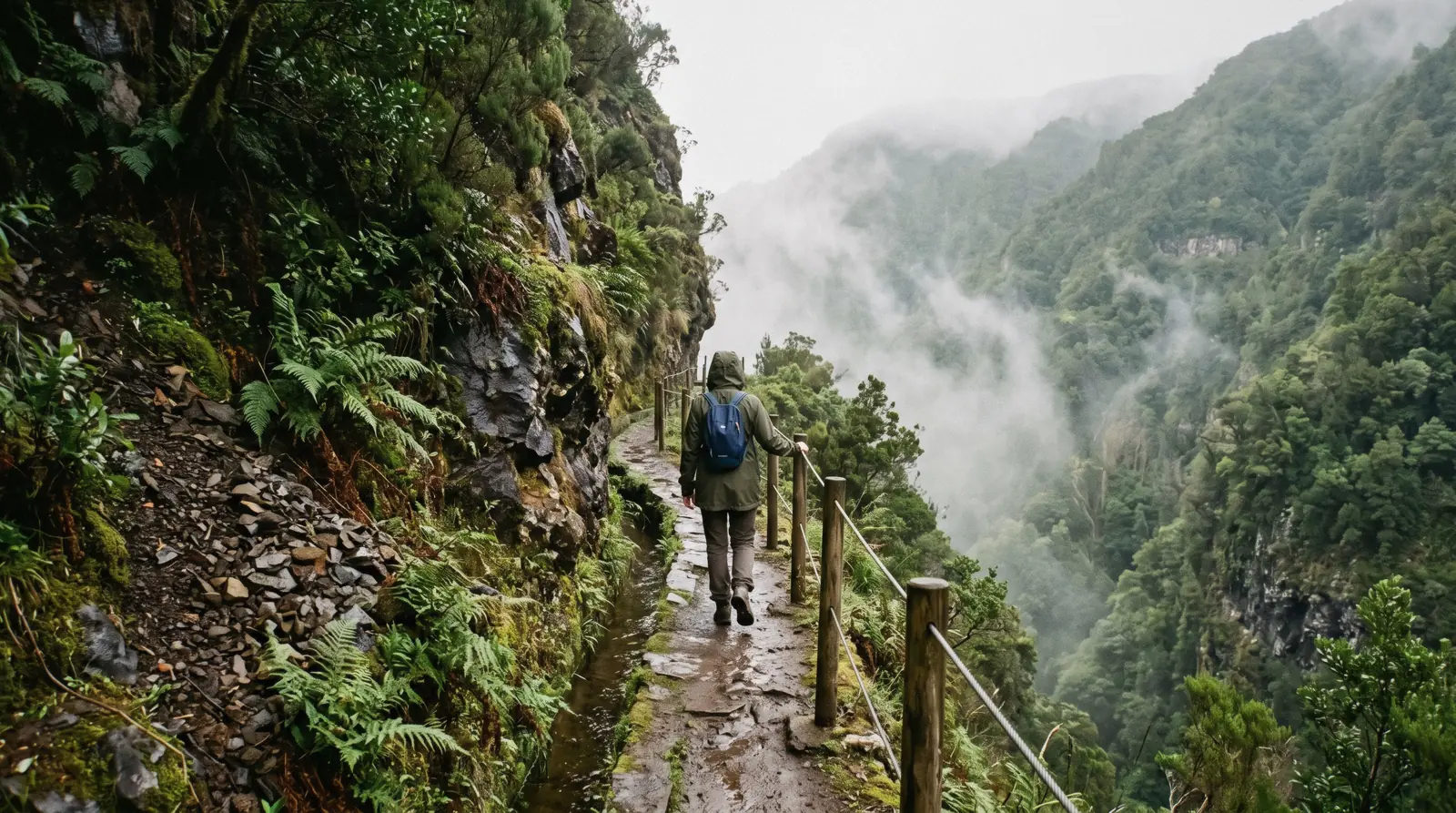
Is Madeira Safe? Emergency Numbers, Hospital and Pharmacies
The honest answer to is Madeira safe is that the island's risks are physical rather than criminal, and each risk has an authority that publishes something useful. This page of our independent guide to Madeira collects the emergency numbers, the hospital, the pharmacy rule and the hazards that actually catch visitors out, trails, cliffs, the sea and the wind at the airport. Read it beside our Madeira weather page and the booking rules on trail fees.
Quick answer The short answer on safety, the emergency number and the hospital
Dial 112, free from any phone. Calls placed in Madeira are answered first by the Public Security Police, who forward rescue and civil protection cases to the regional civil protection service. The island's main hospital is Hospital Dr. Nélio Mendonça in Funchal, and eight health centres have run 24-hour urgent care since 1 May 2024.
Key takeaways
- Save the numbers in the table below before you fly.
- Trail bookings and closures follow the rules in our trail fees guide.
- A yellow or orange weather warning is a signal to change your plan, see the weather guide.
- New to the island, the guided Funchal old town walk is an easy first outing.
Numbers and Addresses to Save Before You Fly
Every row compares a different need, from a life-threatening emergency to a stolen phone, and each number or address comes from an official page: the regional tourism department's useful contacts table, SESARAM's hospital and health centre pages, the civil protection service and the national police report portal.
| Need | Number or address | When | Source |
|---|---|---|---|
| Any emergency | 112, free from any phone | Life-threatening or urgent rescue | madeira.gov.pt useful contacts |
| Main public hospital | Hospital Dr. Nélio Mendonça, Avenida Luís de Camões 57, 9004-514 Funchal, 291 705 600 | Serious injury or illness in Funchal | madeira.gov.pt useful contacts |
| Paediatric emergency | Same hospital, separate service on the technical floor, ages 0 to 17 years 364 days | Children only | sesaram.pt |
| 24-hour urgent care | SASU at the health centres of Calheta, Machico, São Vicente, Porto Santo, Santana, Porto Moniz, Ribeira Brava and Câmara de Lobos | Urgent but not life-threatening, 24 hours since 1 May 2024 | sesaram.pt |
| Urgent-care information line | 808 201 414 | Questions about the SASU network | sesaram.pt |
| PSP Funchal | 291 208 400 | Police matters that are not an emergency | madeira.gov.pt useful contacts |
| Polícia Judiciária Funchal | 291 220 800 | Serious criminal investigations | madeira.gov.pt useful contacts |
| SANAS sea rescue | 291 230 112 | Emergency at sea | madeira.gov.pt useful contacts |
| Regional civil protection (SRPC) | 291 700 112 and 961 943 303 | Non-urgent civil protection information | madeira.gov.pt useful contacts |
| Funchal fire brigade | 291 200 930 | Fire in the capital | madeira.gov.pt useful contacts |
| Motorway emergency lines | 800 290 290 (Via Litoral, Caniçal to Ribeira Brava) and 800 203 040 (Via Expresso, São Vicente, Porto Moniz, Santana, Calheta) | Breakdown or incident on the expressways | madeira.gov.pt useful contacts |
| IFCN trails | 291 145 590 | Trail conditions and closures | visitmadeira.com |
| Online theft report | Queixa Eletrónica national portal | Non-urgent theft, no station visit needed | queixaselectronicas.mai.gov.pt |
For anything urgent, dial 112 rather than a direct line. Two official pages carried different SRPC numbers for a while, and the tourism department's contacts table resolves this as 291 700 112, which is what we print. The paediatric emergency is physically separate from the adult emergency at the same hospital.
Is Madeira Safe? What the Official Record Says and Does Not
Readers ask this question expecting a crime rate. The honest starting point is what no official page publishes.
No Published Crime Figure
No crime rate or crime statistic for Madeira appears on any official page we read. We will not borrow a number from a ranking site or an index, because those are not official and can be out of date. What we can say is structural: 112 is answered in the first instance by the PSP, the island has a full policing structure with PSP in Funchal, the GNR outside it, and the Polícia Judiciária for serious crime.
The regional tourism department lists all of them on its own useful contacts page, which is the closest an official source comes to telling visitors who to call.
Night and Solo Travel
There is no separate official reading of safety at night, and none for solo female travellers either. No authority breaks its information down that way. That silence is itself the finding.
What remains is the standard set of precautions that apply anywhere: watch your belongings in crowded places, keep valuables out of sight, plan how you get back to your accommodation, and use the same caution you would at home. Funchal's evening areas are covered in our Funchal at night page.
If Something Is Stolen
Theft of a phone or a bag does not need a station visit. Portugal's national Queixa Eletrónica portal lets residents and foreign nationals, including tourists, file a police report online for crimes such as theft. The portal excludes emergencies and crimes in progress, which must go through 112.
No official page we read confirms a dedicated tourist police unit on Madeira, so a report in person goes to the regular PSP station in Funchal on 291 208 400.
Hospital, Health Centres and the 24-Hour Cover
Medical cover on Madeira is layered: one main hospital for serious cases, eight 24-hour urgent care units spread across the island, and a health centre in every municipality.
Hospital Dr. Nélio Mendonça
The main public hospital is Hospital Dr. Nélio Mendonça at Avenida Luís de Camões 57, 9004-514 Funchal, phone 291 705 600. It is run by SESARAM, the regional health service, and together with Hospital dos Marmeleiros it forms Funchal's central hospital. It opened on 9 September 1973 under its original name, Hospital Cruz de Carvalho.
Children have their own entrance to care: the paediatric emergency service is physically separate from the adult emergency, located on the hospital's technical floor, and takes patients aged 0 to 17 years 364 days.
The Eight 24-Hour Urgent Care Centres
Since 1 May 2024, eight health centres run a Serviço de Atendimento a Situações Urgentes, SASU, around the clock. They are the practical place for an urgent but not life-threatening problem when you are not in Funchal. SESARAM publishes an information line for the network, 808 201 414.
The eight are Calheta, Machico, São Vicente, Porto Santo, Santana, Porto Moniz, Ribeira Brava and Câmara de Lobos, which covers both coasts and the second island.
Health Centre Phone Numbers
SESARAM and the regional tourism department publish phone numbers for the municipal health centres. The two lists differ slightly for some entries, so we print the tourism department table, read directly, and flag the differences. If you cannot reach one number, try the SASU line above.
The table below compares the main centres by municipality and phone as listed on the official contacts page.
The figures below come from the regional tourism department's useful contacts table, read directly from the official page, and are cross-checked against SESARAM's own health centre contact list where both agree.
| Health centre | Municipality | Phone |
|---|---|---|
| Bom Jesus | Funchal | 291 208 700 |
| São Roque | Funchal | 291 705 410 |
| Monte | Funchal | 291 784 880 |
| Câmara de Lobos | Câmara de Lobos | 291 910 380 |
| Ribeira Brava | Ribeira Brava | 291 950 200 |
| Machico | Machico | 291 969 130 |
| Porto Santo | Porto Santo | 291 980 060 |
The Private SMS Line
One contact causes confusion. The tourism contacts page lists SMS Serviços Médicos de Urgência in Funchal on 291 204 480 and 927 813 729. This is a private medical service, not the public emergency department.
Do not use it instead of 112 in a real emergency, and do not expect public hospital billing rules to apply to it.
Sources: SESARAM 24-hour urgent care, SESARAM health centre contacts, SESARAM paediatrics, Madeira tourism useful contacts
Finding a Pharmacy That Is Open
Portugal rotates duty pharmacies so at least one stays open out of hours in each area. On Madeira, the official tool for finding which one does not always work, and this section is about the practical route around that.
The Official Register Works
IASaúde, the regional health administration, runs the official pharmacy tools. Its register search returns 65 pharmacies for the Autonomous Region, searchable by municipality across all eleven, each entry carrying its licence number and phone. This part is reliable and is the first place to look.
The Duty-Pharmacy Tool Often Does Not
Here is the negative finding that matters most. The separate duty search on the same official site offers only five municipalities in its dropdown, Câmara de Lobos, Funchal, Machico, Santa Cruz and São Vicente. For the day we checked it answered with a message saying there was no on-duty pharmacy information for the selected day.
Six of the eleven municipalities are not even offered as options. An older government duty-pharmacy web address no longer resolves at all.
What To Do Instead
Our pick: phone a pharmacy from the official register and ask, or call the local health centre. Pharmacists know the rota even when the website does not show it. Third-party aggregator sites list duty pharmacies by municipality, but they are not official and we do not cite them as a source.
Outside normal hours and for anything more than a minor problem, the SASU urgent care centres in the hospital section above are open around the clock.
Sources: IASaúde pharmacy register
Insurance, the EHIC and What You May Be Charged
The honest gap on this page is cost. No official page we read states what a visitor pays at the emergency department, so we print no figure and tell you to carry insurance.
What the EHIC Does
The European Health Insurance Card lets an EU-insured visitor access medically necessary, state-provided healthcare in Portugal under the same conditions and at the same cost as a person insured in Portugal. That is the key phrase: the same conditions. The card does not guarantee free treatment.
Madeira has no separate carve-out. For EHIC purposes the island is treated as part of Portugal, and what you pay depends on what the Portuguese system charges its own residents, which can include a user fee at a public emergency department.
Non-EU Visitors
No official Portuguese or EU source states a blanket exemption from hospital charges for visitors without the card. UK travellers use a separate arrangement under the post-Brexit agreements, and travellers from countries with no reciprocal deal have no card at all. The safe assumption for a non-EU visitor is that care is billed unless insurance or an agreement says otherwise.
The Honest Gap
Public hospital emergency rooms in Portugal generally charge a user fee unless the patient arrives by referral, is admitted, or falls under an exemption, but no page we could fetch states the Madeira figure for a foreign visitor, and we will not print a number we cannot source. This is the plain conclusion: carry travel insurance that covers medical care and, given what follows on trails and wind, also covers the activities you plan. Check our Madeira costs page for what everyday spending looks like.
Sources: European Commission EHIC page
The Real Risks: Trails, Cliffs and the Sea
If something goes wrong on a Madeira trip, the odds are it happens outdoors. Trails with exposed drops, cliffs that keep crumbling, and an Atlantic that turns fast each have an authority that tells you what it knows.
Walking: The Official Advice, Quoted
Visit Madeira's own Notice to Walkers is the clearest official statement of what can go wrong and how to prevent it. It recommends that you carry extra food and water, wear suitable clothes and shoes, bring a mobile phone, confirm the route can be finished before dark, check current trail conditions beforehand, tell someone your destination and expected return time, and in case of heavy rain or strong wind do not continue and turn back. The final line is simply: don't take risks.
You Are Legally Responsible
This is not only advice. Article 11 of regional decree DLR 24/2022/M of 19 December states that users of walking trails are personally and exclusively responsible for any material or human damage during their use. The rule is quoted on the SIMplifica booking page and ticked in the booking form.
IFCN, the nature institute, continuously monitors the trails and marks each as open, restricted or inaccessible. It publishes no trail durations or difficulty grades, so any walking time you read anywhere is an estimate by whoever wrote it, not an official figure. A guide takes the route-finding and judgement off you, which is why we list tours at the end of this page.
Refunds of trail bookings are granted only when IFCN or the authorities officially closed or restricted the trail on the booking date, requested within 10 working days. Rain, illness or a missed flight do not qualify.
UK Government Advice
The UK Foreign Office addresses Madeira hiking directly. It says hiking there can be challenging, and advises choosing paths suited to your fitness and experience, being prepared for narrow, uneven paths and heights, wearing appropriate footwear, taking extra care on wet ground after rain, telling your accommodation your planned route, and carrying a phone. Its beach advice is generic Portugal guidance: supervise children, avoid diving into unfamiliar water, and watch for rip currents.
The Sea
The safe swimming options are the managed ones. Funchal's bathing complexes and Praia Formosa are lifeguarded during the bathing season, and the paid volcanic pools at Porto Moniz have lifeguards constantly present according to the municipality. Seventeen coastal beaches across the region hold Blue Flag status on the official 2026 list, along with the marinas at Funchal, Calheta and Machico.
The open coast is another matter. IPMA issues sea agitation warnings for Madeira's zones, and a red flag on a Portuguese beach means entering the water is prohibited outright. That flag rule is national practice, and no Madeira maritime authority page we read prints the legend, so we say where it comes from.
For a calm day on the water, the catamaran dolphin and whale watching trip sails with a certified crew and cancels with a full refund when conditions are unsafe. Where to swim instead is on our beaches page.
The table below compares the four outdoor risks this page covers, what each responsible authority actually publishes, and the action that follows. All statements come from the official pages linked in the source note.
| Risk | What the authority says | What to do |
|---|---|---|
| Mountain trails | IFCN monitors routes and marks them open, restricted or inaccessible, and publishes no durations or grades | Check the IFCN register before you go, book on SIMplifica, turn back in heavy rain or strong wind |
| Personal responsibility | Article 11 of DLR 24/2022/M makes trail users personally and exclusively responsible for damage | Treat the rules as binding, not optional, and carry insurance |
| The sea | Lifeguarded complexes in the bathing season, SANAS for rescue at sea, red flag means no swimming under the national rule | Swim at managed beaches, call 291 230 112 or 112 at sea, obey the flags |
| Cliffs and heights | The UK Foreign Office warns of narrow, uneven paths and heights, and extra care on wet ground | Choose routes for your fitness, keep back from edges, wear proper footwear |
Sources: Visit Madeira Notice to Walkers, SIMplifica service page, gov.uk Portugal travel advice, ABAE Blue Flag list, Porto Moniz municipality
Warnings, Wind and Wildfire
Weather decides more Madeira itineraries than crime ever will. Two authorities matter: the national meteorological service for warnings, and the regional civil protection service for fire restrictions.
The Colour Scale and the Four Zones
IPMA, the Portuguese meteorological service, issues warnings on a four-level colour scale. Green means no adverse conditions are expected, yellow means a risk to weather-dependent activities such as outdoor plans or driving, orange means a dangerous situation with a moderate to high risk, and red means extremely dangerous phenomena. Warnings are issued per hazard, covering strong wind, heavy rain, thunderstorms, heat, cold, persistent fog and rough seas.
Madeira gets its own warnings, separate from the mainland, in four zones: Costa Norte, Regiões Montanhosas, Costa Sul and Porto Santo. Check the zone you are walking in, not the island as a whole.
What Yellow or Orange Means for a Trail Day
Our reading of the official advice: a yellow warning means conditions are against the Visit Madeira walkers' advice, which tells you not to continue in heavy rain or strong wind. An orange warning means a moderate-to-high risk situation, and our pick is to swap the ridge walk for something low and sheltered. The mountains make this real: Funchal at 58 metres altitude averages around 20 degrees annually, while the high ground around Pico do Arieiro is markedly cooler and wetter, so a fine morning in town can be fog and wind on the ridge.
Fire Bans
During high forest-fire-risk periods the regional civil protection service prohibits recreational bonfires and open fires, burning of cut vegetation, use of open flames for lighting or cooking outdoors, sky lanterns and fireworks, and smoking or any open flame within forest areas. Anyone spotting a fire is told to report it immediately through 112, the local fire brigade or civil protection. The UK Foreign Office directs travellers to the IPMA website for Madeira wildfire forecasts specifically, separate from mainland pages, and notes that summer carries high wildfire risk generally in Portugal.
The Airport Wind Problem
Cristiano Ronaldo Airport sees wind-related cancellations and diversions through the year, and regional news has reported single days with dozens of flights cancelled. No official airport or airline page we read states a wind-speed threshold for a diversion, so that figure is simply not published. The practical response is to keep slack in the last day, avoid connecting on the same afternoon you fly out, and know how you would reach the airport if a flight moves.
The wind patterns behind it are on our Madeira weather page.
Sources: IPMA warnings, SRPC recommendations, gov.uk Portugal travel advice
Mosquitoes, Water and Small Print
Two health topics deserve their own facts rather than folklore: the tiger mosquito and its dengue history, and what comes out of the tap.
The Mosquito and Dengue
The Aedes aegypti mosquito has been present on Madeira since 2005, according to the regional government's own mosquito site. It caused the island's first dengue outbreak, running from late September 2012 to early March 2013, with roughly 2,168 probable cases and 1,080 laboratory-confirmed cases, described as the first dengue outbreak in Europe since 1928. The mosquito's established presence is concentrated on the southern coast: Funchal, Câmara de Lobos, Santa Cruz, Ponta do Sol and Calheta, with a single non-established sighting in Porto Moniz.
Surveillance runs on a weekly egg-trap network across all municipalities, and activity increases above 21 degrees Celsius. Use repellent in the southern municipalities in warm months.
Tap Water
The regional utility ARM states its supplied water is of excellent quality, controlled under an approved Water Quality Control Plan. ARM supplies water in bulk across the region except São Vicente and Porto Moniz, and provides retail water directly only in Câmara de Lobos, Machico, Porto Santo, Ribeira Brava and Santana. Funchal's water is managed by the city's own municipal utility.
Here is the plain negative finding: no official page we read states plainly that tap water is safe to drink anywhere on the island. We leave it there and let you decide with your pharmacist or hotel.
Sources: Regional mosquito surveillance site, ARM water page
What No Authority Publishes
This page is as much about the gaps as the facts. Every line below is a question readers ask that no official source answers, stated plainly so you can stop searching.
The Gaps, Listed
We could not find these on any official page, and we will not fill the gaps with borrowed numbers.
- A crime rate or crime statistic for the region of Madeira.
- Any official reading of safety at night or for solo female travellers.
- What a visitor pays at the public emergency department.
- A beach flag colour legend or bathing season dates on the Funchal maritime authority page.
- An airport wind-speed threshold for diversions or cancellations.
- A current duty-pharmacy list for six of the eleven municipalities, and the duty tool returned no information for the day checked in the five it covers.
- Whether the pandemic-era regional health line 800 24 24 20 still operates as a general health advice line.
Sources: SRPC news archive, AMN Capitania do Funchal
Dos and Don'ts for a Safe Trip
Five of each, all drawn from the official advice on this page.
Do
- Save 112, the hospital and the SASU line 808 201 414 in your phone before you fly.
- Check the IFCN trail register and the IPMA warning for your zone on every walking morning.
- Tell your accommodation your route and expected return time before a long hike.
- Carry travel insurance that covers medical care and hiking.
- File a theft report online through the Queixa Eletrónica portal rather than hunting for a station.
Don't
- Do not continue a trail in heavy rain or strong wind, the official walkers' notice says turn back.
- Do not swim on open coast without lifeguards, and never enter the water on a red flag.
- Do not assume the duty-pharmacy website is up to date, phone instead.
- Do not plan a tight departure on your last day, wind diversions happen without a published threshold.
- Do not light fires, lanterns or smoke in forest areas during high fire-risk periods.
Tours That Take the Risk Out of a Day
A guide takes the route-finding and the judgement calls off you, which is most of the safety problem on an unfamiliar island. Prices are in US dollars as listed by each operator, and durations are the tour listing's.
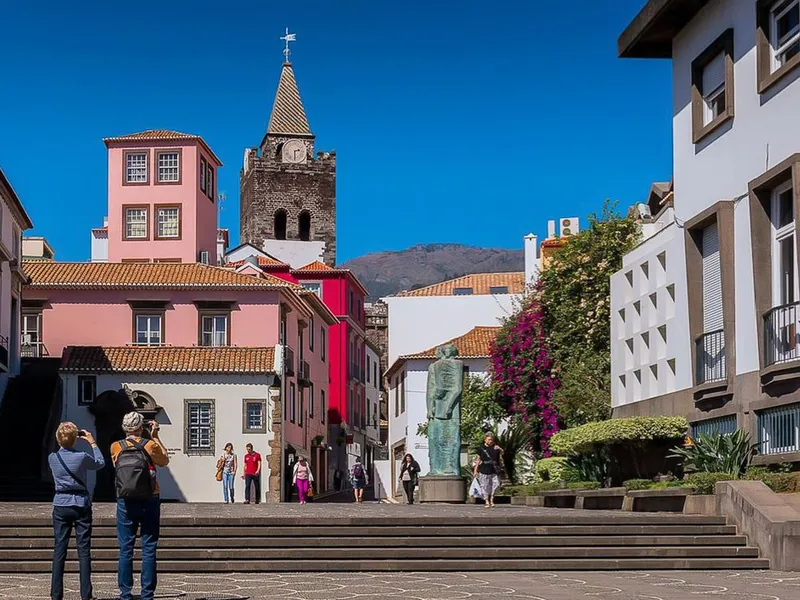 from $19.00
Funchal Old Town Walking Tour
A 2 hour small-group walk through Funchal's Old Town, the Jesuits' College, the Farmers' Market, a wine lodge and a historic sweet factory.
Check Availability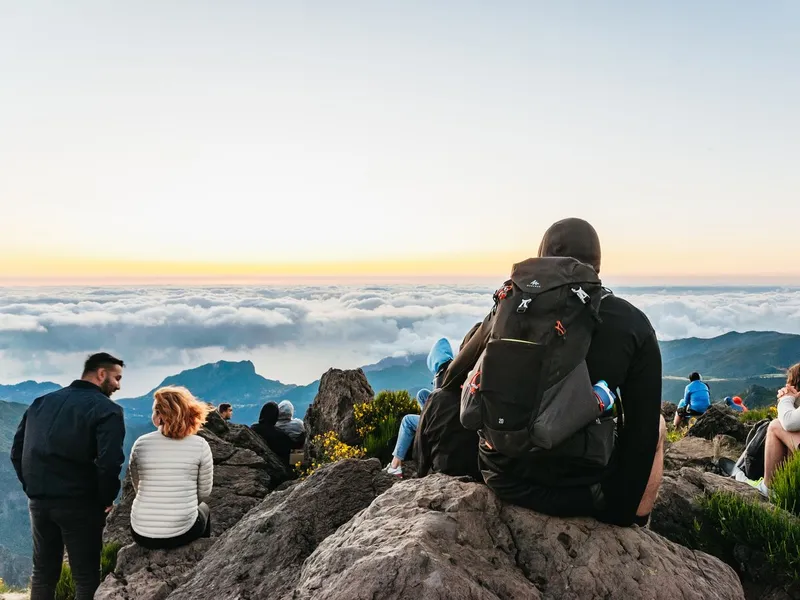 from $56.00
Funchal Pico do Arieiro Sunrise Hiking Transfer
A transfer-only package to Pico do Arieiro for sunrise, with a later pickup from Achada do Teixeira for hikers doing the PR1 trail on their own.
Check Availability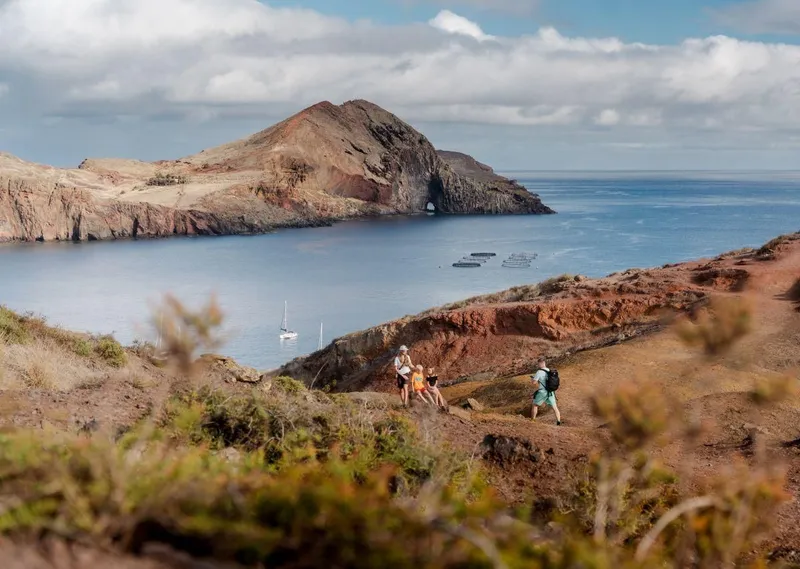 from $36.00
Caniçal Transfer for the PR8 Ponta de São Lourenço Hike
A shared transfer to the PR8 trailhead at Ponta de São Lourenço, Madeira's easternmost tip, with the trail permit and a digital map included.
Check Availability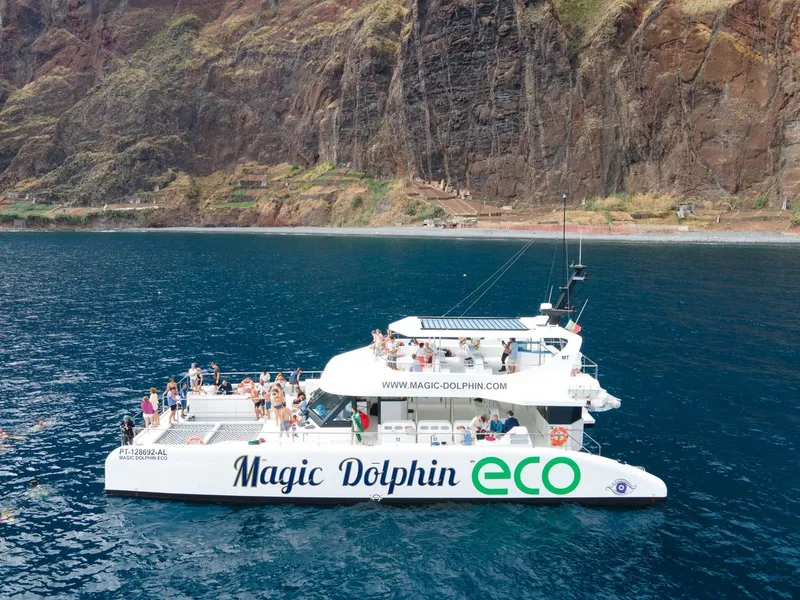 from $40.00
Ecological Catamaran Dolphin and Whale Watching
An electric-assisted catamaran trip off Funchal with land-based whale spotters, two decks and wheelchair-accessible toilets.
Check AvailabilityPrices, ratings and details are the platform's own. dollar figures are the listed prices — the platform bills in your account's currency.
Related Planning Pages
Three pages that answer the questions this one raises.
Madeira Trail Fees and Booking
Since the start of 2026 every classified IFCN trail needs a prior booking on the SIMplifica portal. Our trail fees guide explains the slots, the categories and the narrow refund rule that only applies when the trail is officially closed.
Madeira Weather
Warnings, microclimates and the difference between the coast and the mountains decide your walking days. The weather guide turns IPMA's colour scale into a plan for each zone.
Madeira Airport
Wind-related cancellations and diversions happen without any published threshold. The airport guide covers transfers, distances and how to build slack into your last day.
Questions About Safety and Health in Madeira
Is Madeira safe for tourists?
No official crime figure for the region is published on any page we read, so the honest answer rests on the risks that are documented: trails, cliffs, the sea and airport wind. Each has an authority publishing conditions, starting with the numbers in our table.
Is Madeira safe at night?
There is no separate official reading of night-time safety, and no official figure for any part of the day. The practical advice is the standard set: watch belongings, plan your route back, and call 112 for anything urgent.
Is Madeira safe for solo female travellers?
No authority publishes a separate reading for solo or female travellers, so no official number exists to quote. The same precautions and the same emergency number apply as for any visitor.
Where is the hospital in Madeira?
The main public hospital is Hospital Dr. Nélio Mendonça, Avenida Luís de Camões 57, 9004-514 Funchal, phone 291 705 600. Children have a separate paediatric emergency at the same hospital. See the hospital section for the 24-hour alternatives outside Funchal.
How do I find a pharmacy open now?
The official register lists 65 pharmacies searchable by municipality with phone numbers. The duty-pharmacy tool covers only five municipalities and returned no information for the day we checked, so phone a pharmacy from the register or the local health centre instead.
Are Madeira's hikes dangerous?
The official advice treats them seriously. Visit Madeira tells walkers to turn back in heavy rain or strong wind, and regional law makes trail users personally responsible for damage. IFCN marks each route open, restricted or inaccessible, and publishes no durations or difficulty grades.
Why do planes not land in Madeira?
Wind at Cristiano Ronaldo Airport causes periodic cancellations and diversions, and news reports documented multiple such events. No official wind-speed threshold for diversion is published, so the practical move is to build slack into your last day, as explained in the weather section.
Safety in Madeira, on Film
Three films on the practical side of the question: the mistakes that catch visitors out, one traveller's theft at Carnival, and a resident's answer on how safe the island feels.
Is Madeira Really Safe? 7 Tourist Mistakes That Turn Deadly
The outdoor mistakes that cause most incidents here, the same risks the trail and sea sections cover.
Video: Track Us Down!How SAFE is MADEIRA!?
A resident channel on how the island feels day to day, where no official figure exists.
Video: Hit The Road MadeiraIs Madeira Safe? Our Purse Was Stolen at Carnival (Funchal)
What happens after a theft, the case for the online report route described above.
Video: Track Us Down!Videos load from YouTube only when you press play.
Prices, hours and terms are set by the venue or operator and confirmed at checkout.
We may earn a commission if you book through one of our links, at no extra cost to you. Full affiliate disclosure