 Madeira Trip Guide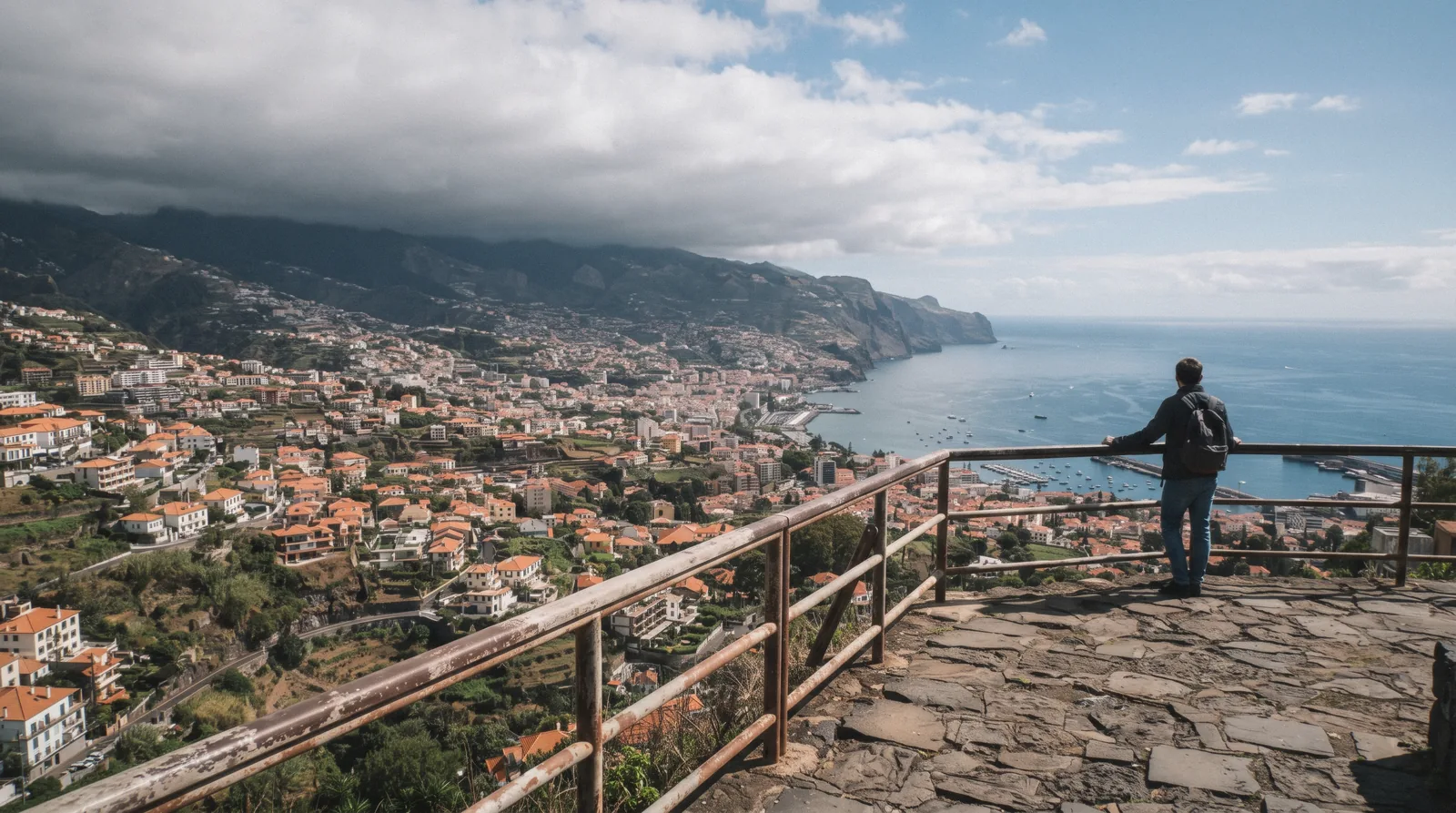
Madeira Weather by Month: Coast Figures and the Mountain Gap
Madeira weather at the coast is measured, and it is mild. Funchal's official station records average highs from 19.9°C (68°F) in February to 26.8°C (80°F) in August, with 574.3 mm of rain a year and almost nothing falling in July and August. That is the whole measured picture, because the only official climate normal for the island comes from one coastal station. Start with our whole-island Madeira guide, then use this page to pick a month and pack for the mountains. More planning help sits in Madeira travel tips.
Quick answer Madeira weather in one answer
Funchal, the only station with an official IPMA climate normal on Madeira, averages highs of 19.9°C (68°F) in February to 26.8°C (80°F) in August. The station records 574.3 mm of rain a year, with July and August under 2 mm each. The mountains have no official figures at all, so treat Funchal as the warm end of any day.
Key takeaways
- Pick your month from the best time to visit Madeira, then match it against the rain figures here.
- For a summit sunrise, the Funchal Pico do Arieiro sunrise hiking transfer drops you at the top before dawn, and reviewers say it runs even in fog.
- Rain in the forecast is not a write-off. Our rainy day in Madeira plan covers museums, indoor markets and covered walks.
Madeira Weather at a Glance
The bars show the average daily high in Funchal for each month. The source is the IPMA 1991-2020 climate normal for station 522, which sits 58 metres above the sea, so this is a coast-only picture.
Source: IPMA climate normal 1991-2020 for Funchal, station 522. The bands are read from the same normal.
Madeira Weather by Month: The Funchal Figures
Every figure below comes from IPMA station 522 in Funchal, the island's only station with a published climate normal for 1991-2020, recorded at 58 metres above sea level. Rain days are days with 1 mm or more.
| Month | Average high | Average low | Rain | Rain days |
|---|---|---|---|---|
| January | 20.0°C (68°F) | 14.3°C (58°F) | 67.1 mm | 6.2 |
| February | 19.9°C (68°F) | 13.9°C (57°F) | 72.4 mm | 5.5 |
| March | 20.6°C (69°F) | 14.3°C (58°F) | 62.3 mm | 5.8 |
| April | 21.0°C (70°F) | 14.9°C (59°F) | 45.2 mm | 4.7 |
| May | 22.0°C (72°F) | 16.2°C (61°F) | 27.2 mm | 3.3 |
| June | 23.7°C (75°F) | 18.2°C (65°F) | 7.8 mm | 1.0 |
| July | 25.4°C (78°F) | 19.7°C (67°F) | 1.7 mm | 0.3 |
| August | 26.8°C (80°F) | 20.7°C (69°F) | 1.3 mm | 0.4 |
| September | 26.6°C (80°F) | 20.4°C (69°F) | 23.1 mm | 3.1 |
| October | 25.2°C (77°F) | 19.2°C (67°F) | 91.2 mm | 7.0 |
| November | 22.8°C (73°F) | 17.0°C (63°F) | 80.3 mm | 7.3 |
| December | 21.0°C (70°F) | 15.5°C (60°F) | 94.8 mm | 8.6 |
IPMA Normal Climatológica, Funchal, 1991-2020. Rain days are days with 1 mm or more. Figures current in Q3 2026.
Where These Numbers Come From
One station, thirty years of records, and a clear limit on what the numbers can tell you.
The Station and the Thirty-Year Normal
The figures on this page come from IPMA station 522 in Funchal, at 58 metres above sea level. The averaging period is 1991 to 2020.
A thirty-year normal is the average of three decades of observations. It describes what the climate at that spot usually does. It is not a forecast and it does not say what any given day next month will bring. It also describes only the coast at Funchal, at near sea level, so it says nothing directly about a hillside at 800 metres.
Over the whole year the station averages a high of 22.9°C (73°F), a low of 17.0°C (63°F), a mean of 20.0°C, 574.3 mm of rain across 53.4 rain days, 104.1 days reaching 25°C or more and 2.5 days reaching 30°C or more.
Extremes and Frost
The station record shows the range the coast can produce. The highest temperature on record at the station is 38.2°C (101°F), set on 9 August 2016. The lowest is 8.5°C (47°F), set on 15 March 2011. The wettest single day delivered 158.6 mm of rain on 26 November 2010.
Frost is absent from the record entirely. The normal lists zero frost days in every month of the year at Funchal. Coastal Madeira does not freeze in a typical year, which is why walking outside after dinner in December is a normal local habit.
Sources: IPMA Funchal normal 1991-2020
The Peaks Have No Official Figures
This is the gap most weather summaries of Madeira paper over, so it is stated here plainly.
IPMA Publishes Nothing for the Mountains
IPMA's climate normal station lists for 1971-2000, 1981-2010 and 1991-2020 hold only two stations in the whole Madeira archipelago: Funchal station 522 and Porto Santo station 524. There is no mountain station and no north-coast station in any of the three periods.
That means no official temperature or rainfall figure exists for Pico do Arieiro at 1,818 m or Pico Ruivo at 1,862 m, and none for Santana, the Paul da Serra plateau or any other upland spot. This page prints no summit temperature, and no other figure for the peaks, because to do so would be to invent a number that no official source contains. A precise summit average, wherever you read one, did not come from IPMA.
What To Do With That
Treat the Funchal figure in the table as the warm end of your day, not the whole day. For Pico do Arieiro and Pico Ruivo, pack layers and a rain jacket whatever the coastal forecast says.
Check the IFCN register and trail notices before walking, because closures are announced independently of the weather. The practicalities are in trail fees and booking. IFCN closed the PR1 section from Pedra Rija to Pico Ruivo on announced works days including 14-17 and 21-22 September 2026. Separately, the forest road from Eira do Serrado to Pico do Areeiro closes on 4 October 2026 from 07:55 to 10:08 for a rally stage.
If your plan is a summit sunrise, the Pico do Arieiro sunrise tour times the transfer to the light. Cloud decides if the sun shows at all, and no average predicts that.
Sunrise and Sunset at the Peak, Month by Month
The table below gives sunrise and sunset for Pico do Arieiro on the 15th of each month, computed by us with the NOAA solar formulas for the peak's coordinates against a sea-level horizon, shown in local clock time. Use it to time a sunrise walk or a late hike. Cloud, not the clock, decides what you see.
| Month | Sunrise | Sunset |
|---|---|---|
| January | 08:10 | 18:23 |
| February | 07:52 | 18:52 |
| March | 07:20 | 19:15 |
| April | 07:39 | 20:37 |
| May | 07:09 | 20:58 |
| June | 06:59 | 21:16 |
| July | 07:10 | 21:17 |
| August | 07:31 | 20:54 |
| September | 07:50 | 20:16 |
| October | 08:11 | 19:36 |
| November | 07:37 | 18:08 |
| December | 08:02 | 18:03 |
Sources: IPMA climate normals station list, IFCN trail notices, sunrise and sunset our computation with the NOAA solar formulas
Madeira Weather Season by Season
The same Funchal normal, read season by season, with the detail on hot days, warm nights and heavy rain days.
Winter, December to February
Winter is the wettest stretch of the year at the coast. December averages 94.8 mm of rain over 8.6 rain days, the highest rain-day count of any month, and February follows with 72.4 mm. Highs hold at 20.0°C (68°F) in January and dip only to 19.9°C (68°F) in February, the coolest month.
Nights fall to 13.9°C (57°F) on average in February. Days of 25°C or more are almost unknown, at 0.0 to 0.4 a month, and nights staying at 20°C or above average 0.1 or fewer. Heavy rain does arrive: December averages 3.5 days with 10 mm or more.
Christmas lights across Funchal run from 1 December, so the season carries a full event programme despite the showers.
Spring, March to May
Spring dries out steadily. March still records 62.3 mm, April drops to 45.2 mm and May reaches 27.2 mm over just 3.3 rain days. Highs climb from 20.6°C (69°F) to 22.0°C (72°F), and nights lift from 14.3°C (58°F) to 16.2°C (61°F).
Hot days are rare, with 0.9 to 1.1 days at 25°C or more per month. Heavy rain days fall away to 0.8 in May. The Flower Festival fills late April and May, by which point the daily risk of a washout is falling.
On the figures alone, May gives the most settled weather without July heat, which is our reading rather than a published ranking. Dates are on Madeira events.
Summer, June to August
Summer is the dry season by a wide margin. June records 7.8 mm, July 1.7 mm and August 1.3 mm, with 0.3 to 1.0 rain days a month. Heat builds too: July averages 18.6 days at 25°C or more and August 28.0, and August averages 23.4 tropical nights staying at 20°C or above.
Highs peak at 26.8°C (80°F) in August. Days of 30°C or more remain rare across the year, only 2.5 on average, so the coast bakes gently rather than fiercely. This is the window the beaches suit best, our reading of the rain figures, and the Atlantic Festival brings fireworks over Funchal bay through June.
Pack for warm evenings rather than afternoon storms.
Autumn, September to November
Autumn splits in two. September keeps summer's warmth, averaging 26.6°C (80°F), 26.6 days at 25°C or more and 20.6 tropical nights, yet rain jumps to 23.1 mm as the dry spell breaks. October and November turn wet, with 91.2 mm and 80.3 mm and 7.0 to 7.3 rain days.
October still averages 3.0 days with 10 mm or more, and 18.1 days reach 25°C or more, so warm and wet can share a day. Highs slide from 25.2°C (77°F) to 22.8°C (73°F). The Madeira Wine Festival runs into mid-September and the Nature Festival follows in October, so the first half of autumn pairs festival energy with rising rain risk.
Sources: IPMA Funchal normal 1991-2020
How Warm Is the Sea
The sea temperature picture is patchier than the air picture, and it is worth knowing who says what.
Who Says What About the Water
No official IPMA sea temperature normal was found for Madeira, so there is no published monthly series to table here. Two municipal sources do give round figures.
The Machico municipality's tourism site states that sea water averages 22°C in summer and 18°C in winter, a picture that applies to the east coast around Machico. Porto Moniz council states an average annual water temperature of 20-21°C at its natural volcanic pools on the north coast, the swimming spot that anchors any visit to Porto Moniz.
In practice, the south coast lidos are where most visitors swim. The municipal bathing complexes run by Frente MarFunchal, Praia Formosa among them, open 09:00-19:00 daily in the 16-30 September period. Treat all of these as local statements rather than a verified island-wide series, and as a guide to what a swim feels like rather than a reading for your date.
Sources: Machico municipality tourism site, Frente MarFunchal
Porto Santo Weather Against Funchal
The neighbouring island has its own IPMA normal, station 524 at 78 metres, so a like-for-like comparison is possible. The table below sets the yearly figures side by side, all from the two 1991-2020 normals.
Funchal Against Porto Santo, Year by Year
Porto Santo is a touch cooler overall and clearly drier. Its average high across the year is 21.6°C (71°F) against Funchal's 22.9°C (73°F), and its warmest month, August, reaches only 25.7°C (78°F) against Funchal's 26.8°C (80°F). The striking contrast is rain: Porto Santo collects 381.7 mm a year against Funchal's 574.3 mm.
The rain-day figure flips the intuition. Porto Santo records 61.6 days with 1 mm or more against Funchal's 53.4, so it gets less rain in total but spreads it over slightly more days. The heavy-rain counts point the same way. Porto Santo averages 9.6 days a year with 10 mm or more against Funchal's 18.4, so its rain arrives in smaller amounts spread over more days. A day trip by ferry pairs with the Porto Santo 4x4 highlights tour once you are on the island, and our Porto Santo guide covers the crossing and the fares.
| Figure | Funchal | Porto Santo |
|---|---|---|
| Average high over the year | 22.9°C (73°F) | 21.6°C (71°F) |
| Average low over the year | 17.0°C (63°F) | 16.5°C (62°F) |
| Rain a year | 574.3 mm | 381.7 mm |
| Days with 1 mm or more | 53.4 | 61.6 |
| Warmest month's average high | August 26.8°C (80°F) | August 25.7°C (78°F) |
Sources: IPMA Funchal normal 1991-2020, IPMA Porto Santo normal 1991-2020
What a Wet Day Changes
Rain reshapes a Madeira itinerary in specific, checkable ways.
Bookings That Move With the Weather
Tours handle rain differently, and the operator listings say so directly.
- The east tour's listing notes that Pico do Arieiro can be under cloud when you arrive, so a grey summit is a known outcome rather than a cancelled one. - The West Madeira Waterfalls and Fanal Forest tour runs come rain or shine, per the operator. - The ecological catamaran whale watching trip is cancelled if conditions are unsafe, with an alternative date or a full refund offered. - Canyoning runs rain or shine per the operator, which makes sense, since the activity is already about water. The level 2 descent near Curral das Freiras is this canyoning trip.
Trail bookings follow a stricter rule. IFCN refunds a trail booking only when the authorities officially closed or restricted the trail on the booking date. Bad weather alone, or a personal change of plan, does not qualify. When rain does trap you in Funchal, rainy day in Madeira lists what actually works indoors.
Reading the Rain Figures Honestly
The Funchal normal gives 53.4 rain days a year, concentrated in October to December, and under 2 mm total in July and August. A rain day means 1 mm or more, which can be a passing shower rather than a washout. The wetter months average 6 to 8.6 such days a month, so most days even in November stay dry.
Plan outdoor mornings in the wet season, keep an indoor fallback for the afternoon, and check the trail register before driving anywhere near the peaks.
Sources: IFCN, operator listings for each tour named above
Forecasts Are Not on This Page
Averages describe the past, not next Tuesday.
Where To Get Tomorrow
A thirty-year normal cannot say what tomorrow brings. For current forecasts and weather warnings for Madeira and Porto Santo, use IPMA, Portugal's national weather service, which issues both for the region: IPMA. Check it the evening before any mountain walk, because the peaks are not described by the Funchal record at all.
Sources: IPMA
Bookings the Weather Decides
Every tour here has a listing that says something concrete about rain, cloud or unsafe conditions. Card prices are the operator's listed US dollar figures. Check the weather note on each before booking.
 from $56.00
Funchal Pico do Arieiro Sunrise Hiking Transfer
A transfer-only package to Pico do Arieiro for sunrise, with a later pickup from Achada do Teixeira for hikers doing the PR1 trail on their own.
Check Availability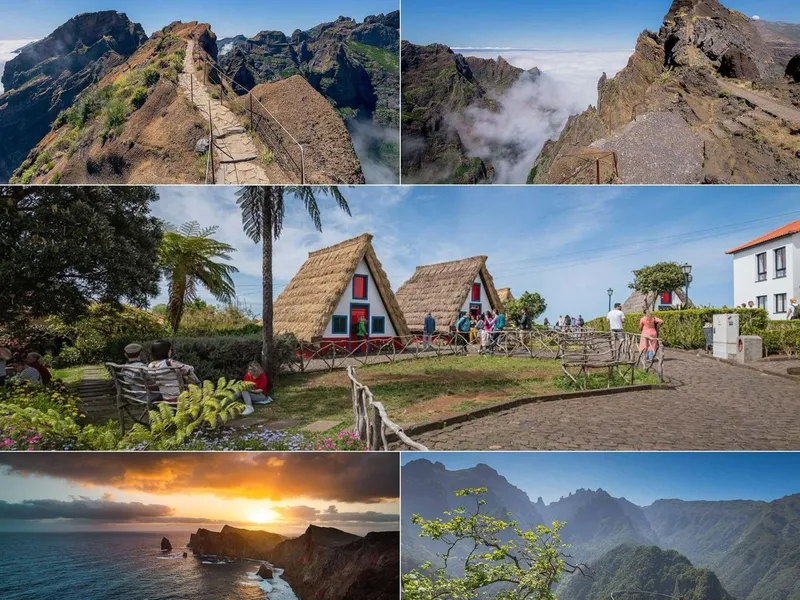 from $42.00
Madeira East Tour: Pico Arieiro, Santana & Laurissilva
A full east-coast day linking Pico do Arieiro's viewpoint, the flat Balcões levada walk, Ribeiro Frio's laurel forest and Santana's thatched houses.
Check Availability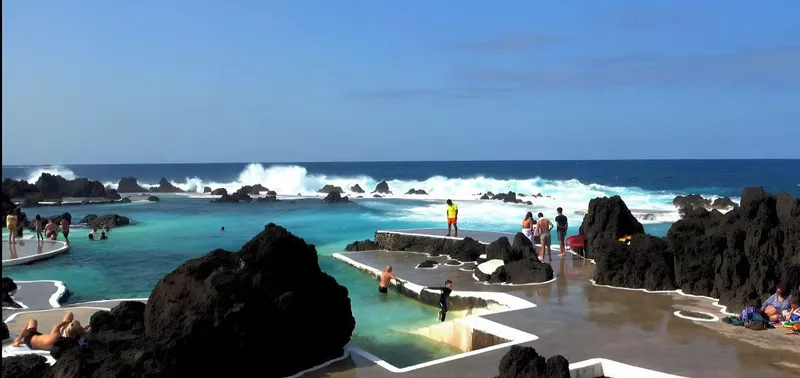 from $39.00
West Madeira Waterfalls and Fanal Forest Tour
A full-day west-coast tour of coastal waterfalls and the fog-shrouded Fanal laurel forest, with hotel pickup from the Funchal area.
Check Availability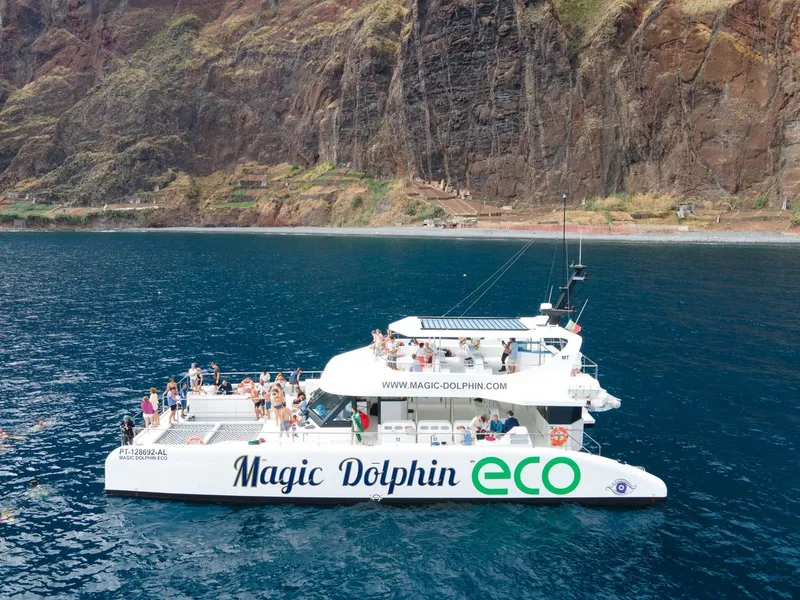 from $40.00
Ecological Catamaran Dolphin and Whale Watching
An electric-assisted catamaran trip off Funchal with land-based whale spotters, two decks and wheelchair-accessible toilets.
Check Availability from $66.00
Intermediate Canyoning Adventure in Madeira (Level 2)
A level 2 canyoning descent near Curral das Freiras with jumps, slides and rappels, full equipment and a certified guide included.
Check AvailabilityPrices, ratings and details are the platform's own. dollar figures are the listed prices — the platform bills in your account's currency.
Related Madeira Planning Pages
Where to go next once the weather picture is clear.
Best Time to Visit Madeira
Turn the monthly figures here into a month choice, weighing rain, events and crowds together.
Rainy Day in Madeira
A worked plan for the days the showers win, from covered walks to indoor Funchal.
Pico do Arieiro
The 1,818 m viewpoint where the mountain weather gap on this page becomes personal.
Madeira Events
Festivals by season, so you can match your weather window to what is on.
Madeira Weather Questions
Is Madeira hot in July?
By the Funchal normal, July averages a high of 25.4°C (78°F) and a low of 19.7°C (67°F), with 18.6 days reaching 25°C or more. It is warm rather than fierce, and the station averages only 2.5 days a year at 30°C or more. Rain is almost absent, at 1.7 mm for the month.
Is Madeira always warm?
The coast, broadly yes. Funchal never records a frost in the 1991-2020 normal, and even February averages a high of 19.9°C (68°F). The record low at the station is 8.5°C (47°F). The mountains are another matter, since no official figures exist for the peaks and upland nights are colder than the Funchal table suggests.
Does it rain a lot in Madeira?
Funchal records 574.3 mm a year across 53.4 rain days, concentrated in October to December. July and August total under 2 mm between them. A rain day means 1 mm or more, so many of those days are showers rather than full washouts.
How cold does the coast get in the winter months?
At the coast it stays mild. January averages a high of 20.0°C (68°F) and a low of 14.3°C (58°F), February dips slightly to 19.9°C (68°F) and 13.9°C (57°F). December is the wettest month at 94.8 mm. The rain, not the cold, is what shapes a winter day.
Is it colder at the top of the island than at the coast?
No official figure exists for Pico do Arieiro, because IPMA publishes no climate normal for any mountain station on Madeira. Height alone makes the summit colder than the coast, but this page prints no number for it, and neither should anyone else. For a walk at 1,818 m pack layers and a rain jacket whatever the Funchal forecast says, and check trail fees and booking for closure notices.
What is the wettest month in Madeira?
In the Funchal normal, December is wettest at 94.8 mm, followed by October at 91.2 mm. December also has the most rain days, 8.6 with 1 mm or more, and the most heavy rain days at 3.5 with 10 mm or more. Remember these are coast figures, and the mountains have no published totals.
Madeira Weather on Film
Three videos that show what the monthly averages cannot: what a season actually looks like on the island.
Madeira Weather Explained! What To Expect During The Year?
A year of Madeira weather walked through month by month, next to the Funchal figures above.
Video: Madeira SecretWhat's the weather like in Madeira? (In the spring)
Spring conditions filmed on the island, the season the table shows drying out.
Video: Hit The Road MadeiraBest time to VISIT MADEIRA!? - 5 TIPS for the AUTUMN Weather
Autumn on Madeira, when the rain returns to the coast figures on this page.
Video: Hit The Road MadeiraVideos load from YouTube only when you press play.
Prices, hours and terms are set by the venue or operator and confirmed at checkout.
We may earn a commission if you book through one of our links, at no extra cost to you. Full affiliate disclosure