 Madeira Trip Guide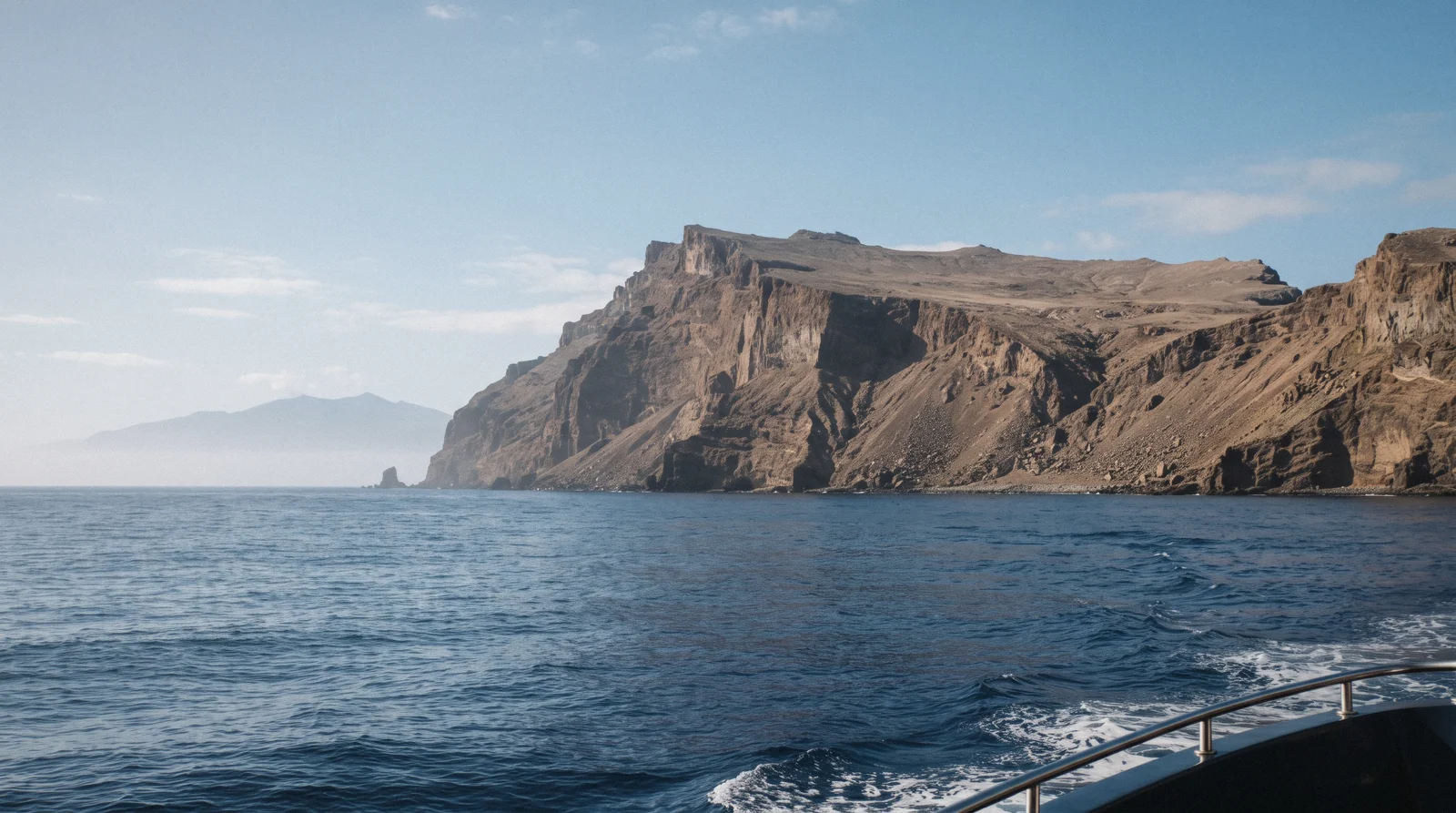
Desertas Islands, Madeira: Boat Trip and Reserve Rules
The Desertas Islands are a chain of three uninhabited volcanic islands southeast of Madeira, protected as a nature reserve since 1995. Most visitors see them from the deck of a full-day catamaran, and that is what most boat trips sell. Setting foot on Deserta Grande is a different matter. It needs prior authorisation from IFCN, the reserve's managing body. This page separates the cruise, the landing and the closed zones, so you know exactly what you are buying before you book a day trip.
Quick answer The short version on boat trips, landing and rules
The Desertas Islands lie 22 nautical miles from Funchal and can only be reached by boat, since no public ferry exists. A full-day catamaran trip costs $103.00 and looks at the islands from the sea. Landing on Deserta Grande needs a separate IFCN authorisation and is not part of that cruise.
Key takeaways
- Book the Desertas Islands full-day catamaran if you want the islands from the water, with lunch on board.
- Want to set foot on Deserta Grande? Request the credential on SIMplifica and contact IFCN at +351 291 145 590.
- Most of the reserve is a Total Protection zone. People and boats may not enter it, except the Doca bay anchorage.
- Prefer a shorter sea day? Compare whale watching in Madeira instead.
Key facts
Opening hours
| Reserve access | By IFCN authorisation only–No public hours |
|---|
Closed No public opening days. Access depends on authorisation and sea conditions
Admission
- Adult
- No IFCN fee on the SIMplifica credential service. The full-day catamaran on this page is $103.00
- Reduced
- Not applicable
- Free
- The credential service lists no cost
Planning it
- Time needed
- The catamaran listing runs 9 hours
- Book ahead
- Essential — weeks ahead
- Address
- Reserva Natural das Ilhas Desertas, 22 nautical miles from Funchal (IFCN)
This table compares the two ways people actually visit the Desertas: the official IFCN credential for arranging your own visit, and three bookable boat trips from Funchal. Prices for the tours are the operators' listing prices in dollars. The credential fee comes from the SIMplifica service page.
Do you want to see the islands from the deck, or set foot on Deserta Grande?
| Option | Price | Includes | Cancel | Book |
|---|---|---|---|---|
| IFCN credential on SIMplificaPrivate boat skippers and groups arranging their own landing | No fee listed | Authorisation to visit the reserve. Transport not included | Not stated | Official site |
| Desertas Islands full-day catamaranTravellers who want the islands from the water in one full day | $103.00 as listed by the operator | 9-hour cruise from Funchal marina with lunch on board, toilet and bar. No landing | Free up to 24 hours before | Check Availability |
| Responsible whale and dolphin watching tourTravellers who want marine wildlife without the long crossing | $69.00 as listed by the operator | 2-hour small-boat trip from Funchal marina with naturalist or marine biologist guides. Does not reach the Desertas | Free up to 24 hours before | Check Availability |
| Ecological catamaran dolphin and whale watchingFamilies and anyone wanting a short, low-cost sea trip | $40.00 as listed by the operator | 2 hours 30 minutes on an electric-assisted catamaran off Funchal. Does not reach the Desertas | Free up to 24 hours before | Check Availability |
Tour prices, durations and cancellation terms are the operators' listings. The credential fee comes from the SIMplifica service page. Figures current in Q3 2026.
Desertas And Open-Sea Trips From Funchal Compared
Three boat options leave from Funchal marina. Only the first sails out to the Desertas Islands. The other two stay near Madeira's coast and look for whales and dolphins.
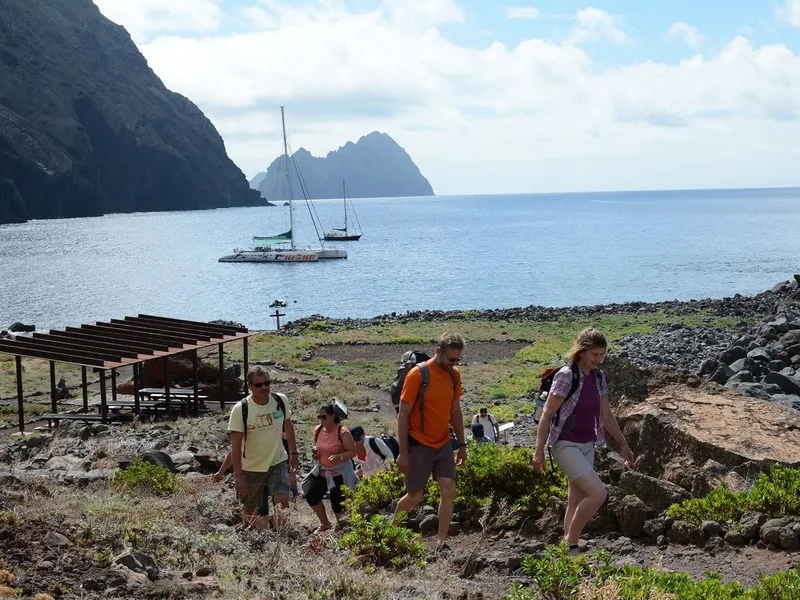 from $103.00
Desertas Islands Full-Day Catamaran Trip from Funchal
A full-day catamaran trip from Funchal out to the uninhabited Desertas Islands, with lunch served on board.
Check Availability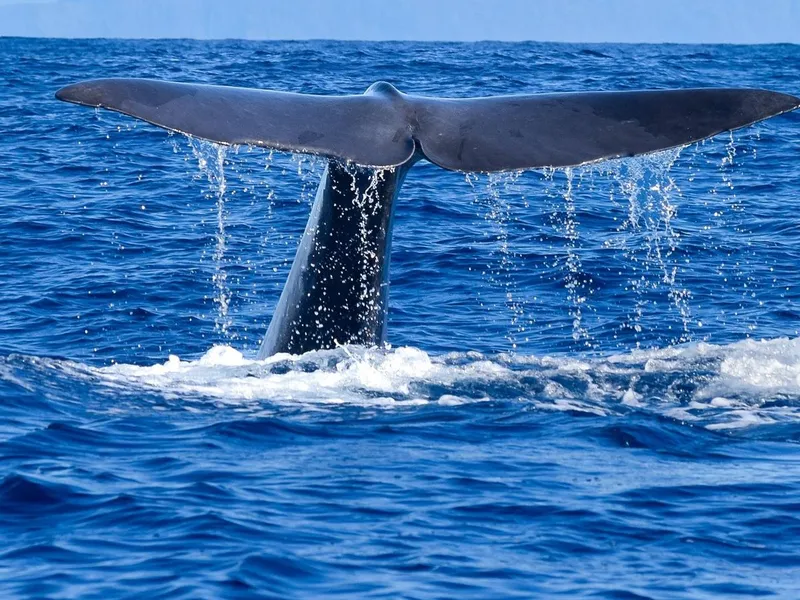 from $69.00
Madeira Responsible Whale and/or Dolphin Watching Tour
A small-group boat tour with naturalist or marine biologist guides and land-based spotters, run under the operator's own animal welfare rules.
Check Availability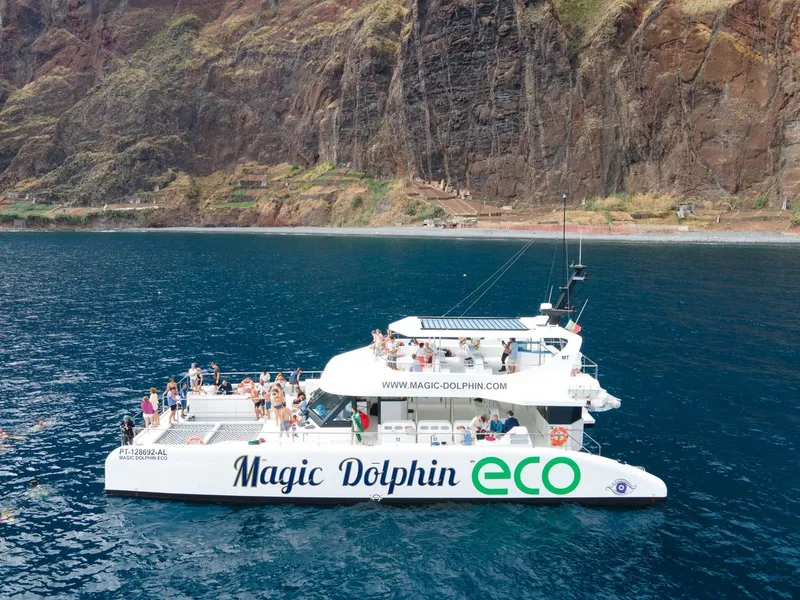 from $40.00
Ecological Catamaran Dolphin and Whale Watching
An electric-assisted catamaran trip off Funchal with land-based whale spotters, two decks and wheelchair-accessible toilets.
Check AvailabilityPrices, ratings and details are the platform's own. dollar figures are the listed prices — the platform bills in your account's currency.
Landing On Deserta Grande: The IFCN Credential
This is the part buyers get wrong most often. A Desertas boat trip and a Desertas landing are two different things. Here is what each official source says, and where the boundaries run.
What The Catamaran Listing Says
The listing for the Desertas Islands full-day catamaran states it plainly: landing on the Desertas Islands requires a separate permit and is not part of the cruise. You sail about 22 nautical miles from Funchal, you see the cliffs, you eat lunch on board, you come back. That is the product.
If stepping onto the island is the reason you are booking, this tour will not deliver it, and the listing says so itself.
How Landing Actually Works
IFCN's Como Visitar page describes the real visit. Thousands of people reach the reserve every year on private boats, maritime-tourism boats and Portuguese Navy ships, always with prior authorisation from IFCN. The main nature-tourism activity is a guided visit along an interpretive path, followed by wildlife watching and listening.
Authorisation is requested through the SIMplifica portal, on the service called Credencial para visitar a Rede de Áreas Marinhas Protegidas. That credential covers the Desertas, the Selvagens and Porto Santo's marine protected areas. The cost section on the service page reads Não se aplica, so no fee is listed.
There is no public ferry. IFCN does not publish a quota, a timetable or a landing-slot count, and it does not say which tour operators hold credentials. Ask the operator before booking whether they land at Doca.
What Is Allowed And What Is Not
The reserve is split into zones, and the split decides where your boat may go. The table below compares the two protection zones and the banned list, using IFCN's management page as the source.
| Zone | Where | People and boats |
|---|---|---|
| Total Protection | All land, including Ilhéu Chão, Deserta Grande, Bugio and the islets, plus the sea to 100 m depth south of Ponta da Doca and Ponta da Fajã Grande | Entry banned, with one exception: the Doca bay, the authorised anchorage |
| Partial Protection Type I | The sea to 100 m depth north of Ponta da Doca and Ponta da Fajã Grande | Access allowed, plus line fishing, diving, commercial and recreational fishing |
| Banned everywhere | The whole reserve | Collecting or capturing living things, pets, litter, boat washing water, noisy activities, seine and trawl nets, spearfishing |
What Needs IFCN Authorisation
With authorisation, IFCN allows access to land, the interpretive visit, bird watching and listening, overnight stays for awareness and educational activities, and non-motorised sporting nautical activities. Everything else on land is off limits. Contact IFCN on +351 291 145 590 or by email at [email protected] if the SIMplifica form leaves questions open.
Sources: IFCN Como Visitar, SIMplifica credential service, IFCN management and protection.
Three Islands In Figures
The Desertas are a chain of three volcanic islands stretching southeast from Madeira, once a single island. They formed about 3.5 million years ago. The reserve covers 12,586 hectares and is bounded by the 100 m depth line. The figures below come from IFCN's reserve description.
The Islands Side By Side
The table compares the three islands by length, highest point and the detail that matters most for a visitor.
| Island | Length | Highest point | Note |
|---|---|---|---|
| Ilhéu Chão | About 1,600 m | 98 m at the lighthouse, north end | The smallest, a plateau island about 80 m high and 500 m wide |
| Deserta Grande | 11,700 m from Ponta da Castanheira to Ponta do Tabaqueiro | 479 m | The largest and highest, up to 1,900 m wide. Fajã da Doca and Fajã Grande were formed by landslides in 1894, and the Doca landslide ridge makes the reserve's official anchorage |
| Bugio | 7,500 m | 388 m | Up to 700 m wide. The only home of the Desertas petrel |
Where They Are
The chain sits southeast of Madeira, 12 nautical miles from Ponta de São Lourenço and 22 nautical miles from Funchal. From the deck of the full-day catamaran the cliffs grow slowly out of the horizon on the way out, which is part of why the crossing takes a full day.
Sources: IFCN Sobre, IFCN Valores Naturais.
Monk Seals, Petrels And A Tarantula
The Desertas were protected for one animal above all: the Mediterranean monk seal, one of the rarest marine mammals on earth. The reserve also holds seabird colonies of European importance and several species found nowhere else.
The Monk Seal
The Mediterranean monk seal, lobo-marinho in Portuguese, is the reason the islands got protection in the first place. A small colony survives here, and the 1988 conservation project grew into decades of work, including a rehabilitation unit built at Doca. Under the regional marine-vertebrates law, boats may not enter caves used by monk seals without authorisation, may not approach closer than 50 m, and may not chase or touch them.
Most catamaran passengers never see one. IFCN's board at Ponta de São Lourenço says monk seals may also be seen from land at the eastern tip of Madeira, and the Ponta de São Lourenço walk is the cheapest way to try.
Seabirds
Four petrel and shearwater species nest here: Cory's shearwater, the Madeiran storm petrel, Bulwer's petrel and the Desertas petrel. Deserta Grande holds the largest Bulwer's petrel colony in the Atlantic and possibly the world. The Desertas petrel nests only on Bugio, which is one reason the island is sealed off.
Guided bird watching and listening is allowed, but only with IFCN authorisation.
Endemics On Land
The strangest resident is the Desertas tarantula, Hogna ingens, found only in the Vale da Castanheira at the north end of Deserta Grande. Around 50 land snail species and subspecies live here, 44 of them endemic. There is an endemic lizard subspecies, Teira dugesii mauli.
About 200 vascular plant species grow on the islands, 30% of them Madeiran endemics, and two plants grow nowhere but Deserta Grande: Sinapidendron sempervivifolium and Musschia isambertoi. Turtles and cetaceans pass through the surrounding waters.
Sources: IFCN Valores Naturais, IFCN management and protection.
Why The Desertas Are Closed Off
The strictness is not bureaucracy for its own sake. The islands were going one way, and the protection reversed it. A conservation project for the monk seal started the process, and the rules tightened step by step over three decades.
From Last Refuge To Strict Reserve
The monk seal had been pushed to the edge across the Mediterranean and Atlantic, and the tiny Desertas colony became one of its last strongholds. Rabbits, goats and mice were degrading the habitat and competing with the plants the seals' island ecosystem depends on. Habitat recovery on Deserta Grande began with rabbit eradication, and the islands have been watched permanently by nature wardens since protection began.
The European Diploma for Protected Areas from the Council of Europe, awarded in March 2014, recognises that work.
- 1988: monk seal conservation project begins, wardens start their permanent watch
- 1996: rabbits eradicated on Deserta Grande, goats and mice reduced
- 1997: monk seal rehabilitation unit built at Doca
- 2014: European Diploma for Protected Areas, SPA enlarged to 76,462 hectares
Sources: IFCN Historial, IFCN Sobre.
The Desertas In Dated Lines
The protection history in dated steps, all from IFCN's own chronology. Read it before you book, because each step explains one rule you will meet on the water.
-
1988
Monk seal conservation project begins
The small colony of Mediterranean monk seals was the reason the islands were closed off.
-
1990
Special Protection Area under DLR 14/90/M
The islands were first protected as an Área de Proteção Especial.
-
1992
Biogenetic Reserve of the Council of Europe
The Council of Europe recognised the islands as a Biogenetic Reserve.
-
1995
Nature Reserve under DLR 9/95/M
The reserve took the status it holds today.
-
1996
Habitat recovery on Deserta Grande
Rabbits were eradicated and goat and mouse numbers cut back.
-
1997
Monk seal rehabilitation unit at Doca
Built at Doca on Deserta Grande to treat weakened seals.
-
2006-2010
SOS Freira do Bugio project
A four-year project for the Desertas petrel, which nests only on Bugio.
-
2014
SPA enlarged and European Diploma awarded
The Special Protection Area grew to 76,462 hectares, and the Council of Europe awarded the European Diploma for Protected Areas in March.
The sequence explains why landing is credential-only, why pets and loud noise are banned, and why the wardens are on site permanently. The reserve is run for the animals first. Visitors are guests inside it, and thousands come every year under that arrangement. Source: IFCN Historial.
Getting To The Desertas
There is exactly one realistic route for a regular traveller, and it starts at Funchal marina. The alternatives each have a catch.
Your Three Options
The islands sit 22 nautical miles from Funchal, roughly an open-sea day out and back. No public ferry exists, and IFCN's page mentions none. The options are these.
| Option | How it works | Catch |
|---|---|---|
| Full-day catamaran | The Desertas Islands catamaran departs Funchal marina, 9 hours with lunch on board | No landing. The listing says a separate permit is needed and landing is not part of the cruise |
| Private boat | Request the IFCN credential on SIMplifica, then anchor at Doca bay | You need your own or chartered vessel, and the crossing is open sea. The credential lists no fee but transport is not included |
| Look from Madeira | Walk or boat to the eastern tip and look southeast | The islands are 12 nautical miles from Ponta de São Lourenço but rarely clearly visible. IFCN's board there is about monk seals, not island views |
Practical Booking Notes
The catamaran has no hotel pickup, so plan your own way to Funchal marina. Free cancellation runs up to 24 hours before, and in bad weather guests get an alternative or a full refund. That matters, because the crossing is exposed.
Give the booking three days of lead time in the busiest season, our estimate based on the fixed departure times.
Sources: IFCN Como Visitar, SIMplifica credential service.
Five Things Most Visitors Do Not Know About The Desertas
These are the facts that change how people plan the trip. Each one comes from an official source, listed in brackets.
Five Facts Before You Book
Read these five points. Any one of them can change your booking.
- The catamaran does not land. Its own listing says landing requires a separate permit and is not part of the cruise. (the tour listing on this page)
- The IFCN credential costs nothing on paper. The SIMplifica cost section reads Não se aplica, so no service fee is listed. [SIMplifica service page]
- Deserta Grande holds the largest Bulwer's petrel colony in the Atlantic and possibly the world, and the Desertas petrel nests only on Bugio. [IFCN Valores Naturais]
- A spider lives on one valley of one island. The Desertas tarantula is found only in the Vale da Castanheira at the north end of Deserta Grande. [IFCN Valores Naturais]
- The fajãs at Doca and Fajã Grande were formed by landslides in 1894, and the Doca landslide ridge is why that bay is the reserve's official anchorage. [IFCN Sobre]
Sources: IFCN Sobre, IFCN Valores Naturais, SIMplifica credential service.
How Much Time To Give The Desertas
Three ways to fit the islands into a Madeira trip, compared. Durations for the tours are the operators' listings, not our own timings.
Three Routings Compared
The table compares three ways of adding the Desertas or their wildlife to your stay, with the time each takes per the operator listing.
| Routing | Time needed | What you get |
|---|---|---|
| Full-day catamaran from Funchal | 9 hours, per the listing | The islands themselves, from the water, with lunch. The whole day goes on this |
| Short whale and dolphin trip | 2 hours, per the listing | Marine life near Funchal with a naturalist guide. The Desertas are not on the route |
| Combination day | 9 hours plus a second morning, our estimate | Catamaran one day, then the Ponta de São Lourenço peninsula another morning, where IFCN's board says monk seals may be seen from land |
Our Pick
If the Desertas are on your list, give them the full day and nothing else. The crossing is long and the islands are the whole point. Cramming them into a morning does not work with any product on sale.
Sources: tour listings for durations, IFCN for reserve rules.
On A Desertas Trip: What To Do, And What Not To
The reserve rules apply to everyone on the water, tour guests included. Most of the don'ts below are straight from IFCN's banned list.
Do
- Ask the operator before booking whether the trip lands at Doca
- Request the IFCN credential on SIMplifica if you are arriving on your own boat
- Book the catamaran with the 24-hour free cancellation window in mind and watch the weather
- Bring binoculars for the cliffs, the petrels and a possible monk seal
- Keep noise down near the islands, quiet is part of the rules
Don't
- Do not bring pets, they are banned in the whole reserve
- Do not collect or capture any living thing, plants included
- Do not take litter ashore or discharge boat washing water
- Do not fish with seine or trawl nets or spearfish anywhere in the reserve
- Do not enter the Total Protection zone by boat, except the Doca bay anchorage
Desertas Islands Map: Funchal, The Reserve And São Lourenço
The map shows the departure point in Funchal, the eastern tip of Madeira and the reserve itself. Note how close the islands sit to Ponta de São Lourenço and how far they lie from Funchal, which is why the catamaran takes a full day.
Coordinates from IFCN reserve data for the islands and the reserve, Wikidata for Funchal marina and the PR8 trailhead.
Near The Desertas
Three pages that pair well with a Desertas trip or a shorter sea day.
Whale watching in Madeira
If the 9-hour crossing is too much, a whale watching trip from Funchal takes two to three hours. Compare the Responsible whale and dolphin watching tour with the shorter ecological catamaran.
Ponta de São Lourenço
The easternmost peninsula of Madeira points straight at the Desertas, 12 nautical miles away. IFCN's board there says monk seals may be seen from land, so it is the cheapest seal-watching option on the island.
Porto Santo
The other island you can reach by ferry from Madeira. Unlike the Desertas, Porto Santo has a regular passenger service and a sandy beach town at the end of it.
Desertas Islands Questions
Can you land on the Desertas Islands?
Only with prior authorisation from IFCN, requested through the SIMplifica credential service. The main activity is a guided visit along an interpretive path. Landing is not part of the full-day catamaran cruise, its listing says so.
How do you get to the Desertas Islands from Madeira?
By boat only. No public ferry exists. The usual option is a full-day catamaran from Funchal marina, or a private boat with the IFCN credential. IFCN's page mentions no ferry and no other public transport.
What animals live on the Desertas Islands?
Mediterranean monk seals, four seabird species including the Desertas petrel that nests only on Bugio, the endemic Desertas tarantula, about 50 land snail taxa of which 44 are endemic, an endemic lizard subspecies, and about 200 vascular plants. Turtles and cetaceans pass through the surrounding waters.
Do you need a permit to visit the Desertas Islands?
Yes. IFCN says all visitors, including thousands arriving each year on private boats and maritime-tourism boats, need prior authorisation. It is requested on SIMplifica, where the credential service lists no fee. Contact IFCN on +351 291 145 590 with questions.
How far are the Desertas Islands from Funchal?
22 nautical miles, per IFCN. From Ponta de São Lourenço, the eastern tip of Madeira, it is 12 nautical miles.
Can you see monk seals on a Desertas boat trip?
Possibly but not likely. The colony is small and the seals are shy, and no listing promises sightings. IFCN's board at Ponta de São Lourenço says monk seals may also be seen from land there.
Does anyone live on the Desertas Islands?
No residents are described by IFCN. The islands are uninhabited. IFCN keeps a permanent watch by nature wardens of the Corpo de Vigilantes da Natureza, in place since protection began.
Where The Desertas Fit In A Trip
Treat the Desertas as a full-day commitment. The catamaran leaves Funchal marina in the morning, takes nine hours in total, and returns you to town in the late afternoon. Book it on a day with a settled forecast and keep the free 24-hour cancellation in mind. The day before and after suit easy activities in Funchal, since a full day at sea is tiring in its own quiet way.
If the islands are a secondary interest, skip the long crossing and combine a short whale watching tour with the Ponta de São Lourenço walk on the same or the next day. You get marine wildlife and the landscape closest to the Desertas at a fraction of the cost. For a broader plan, our Madeira in 5 days itinerary leaves room for one big sea day.
The Desertas Islands On Film
Three films of the islands from the water and from land, so you can see the cliffs a catamaran day actually shows you.
Desertas Islands
The three islands filmed from the sea on a calm day.
Video: I See MadeiraMadeira - Deserta Grande - Guided Tour
A guided visit on Deserta Grande, the kind of walk the IFCN credential covers.
Video: Travel ExperiencesDesertas Islands - Madeira Portugal
A short look at the reserve and its coastline from a boat.
Video: hvbaskeyVideos load from YouTube only when you press play.
Prices, hours and terms are set by the venue or operator and confirmed at checkout.
We may earn a commission if you book through one of our links, at no extra cost to you. Full affiliate disclosure