 Madeira Trip Guide
Whale and Dolphin Watching in Madeira
Whale watching, Madeira's most booked sea trip, runs under rules with hard numbers in them: no boat may approach closer than 50 metres, and no group of boats may stay with the animals longer than 40 minutes. The Madeira Whale Museum counts 28 cetacean species in these waters. This page compares the boats leaving Funchal marina, sets out the law, and answers the swimming question, as part of this independent Madeira island guide and its day trips hub.
Quick answer The short version before the detail
Whale watching, Madeira: boats run all year from Funchal marina with 28 cetacean species confirmed in these waters. Licensed boats may not approach a marine mammal closer than 50 metres, and swimming with whales or dolphins is banned by law. The cheapest listed trip is $40.00 for 2 hours 30 minutes.
Key takeaways
- Compare the boats in the tour comparison table, from a $40.00 catamaran to a full-day Desertas cruise.
- No month-by-month sighting calendar or sighting odds are published by any official source. See When To Go.
- A free swim among dolphins is not legal in Madeira. Read the swimming rules before you book any trip that sells it.
- Add Madeira weather checks for sea conditions, or see Desertas Islands for the full-day cruise destination.
Key facts
Opening hours
| Boat departures | Set by each operator–Set by each operator |
|---|
Closed No official closed days. Operators cancel in unsafe seas
Admission
- Adult
- From $40.00 on the catamaran listings on this page
- Reduced
- Set by each operator
- Free
- No official free entry, there is no public fee to watch
Planning it
- Time needed
- Tour listings run 2 to 3 hours, the Desertas day runs 9 hours
- Book ahead
- Recommended — a few days
- Address
- Marina do Funchal, 9000-055 Funchal (the departure point of the three tours on this page)
The four rows below compare every whale watching in Madeira tour on this page, all departing from Funchal marina. There is no government or public ticket for watching whales, so every price is the operator's own listing, in dollars, as published. Cancellation is the same on all four: free up to 24 hours in advance.
Do you want the big catamaran at the lower price, or a smaller boat with a biologist?
| Option | Price | Includes | Cancel | Book |
|---|---|---|---|---|
| Ecological Catamaran Dolphin and Whale Watching, 2 hours 30 minutesOur pick for families and wheelchair users, on price | $40.00 as listed by the operator | Land-based whale spotters, two decks, two wheelchair-accessible toilets, unlimited access to the outdoor nets | Free cancellation up to 24 hours before | Check Availability |
| Funchal Dolphin and Whale Watching Catamaran Cruise, 3 hoursWants the longest standard catamaran time at the same price | $40.00 as listed by the operator | Round-trip cruise from the Seaborn berth, onboard crew | Free cancellation up to 24 hours before | Check Availability |
| Madeira Responsible Whale and/or Dolphin Watching Tour, 2 hoursOur pick if you want a smaller boat and a biologist | $69.00 as listed by the operator | Naturalist or marine biologist guides, small boat, land-based spotters | Free cancellation up to 24 hours before | Check Availability |
| Desertas Islands Full-Day Catamaran Trip, 9 hoursWants a full day at sea and the uninhabited islands | $103.00 as listed by the operator | Full-day cruise to the Desertas Islands with lunch on board | Free cancellation up to 24 hours before | Check Availability |
No government fee applies to watching whales and dolphins. The law caps boats and observation time instead of charging a public price. All prices are the operators' own listings, not a public tariff. Durations are the listings'. Figures current in Q3 2026.
Whale Watching Tours From Funchal Compared
Four bookable tours, all leaving Funchal marina with no hotel pickup. Three are whale and dolphin trips of 2 to 3 hours, the fourth is a 9-hour day to the Desertas Islands. All four allow free cancellation up to 24 hours in advance.
 from $40.00
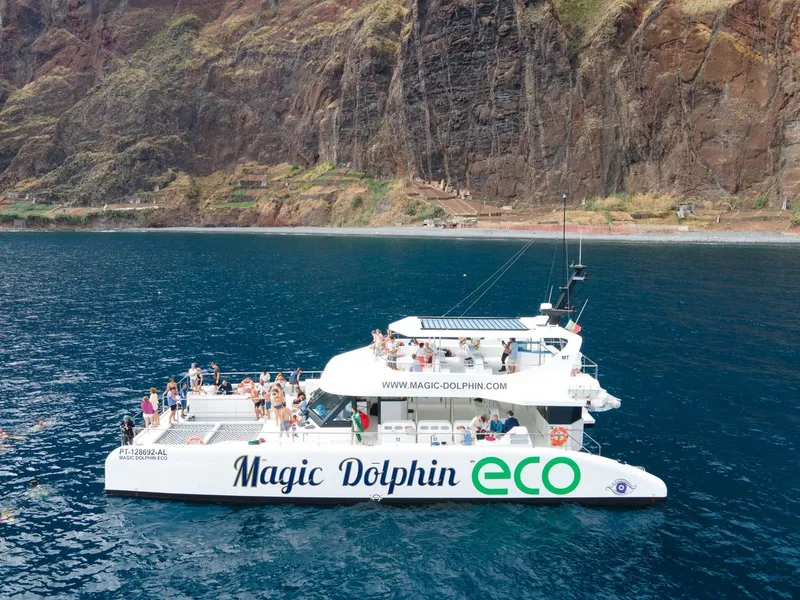
Ecological Catamaran Dolphin and Whale Watching
An electric-assisted catamaran trip off Funchal with land-based whale spotters, two decks and wheelchair-accessible toilets.
Check Availability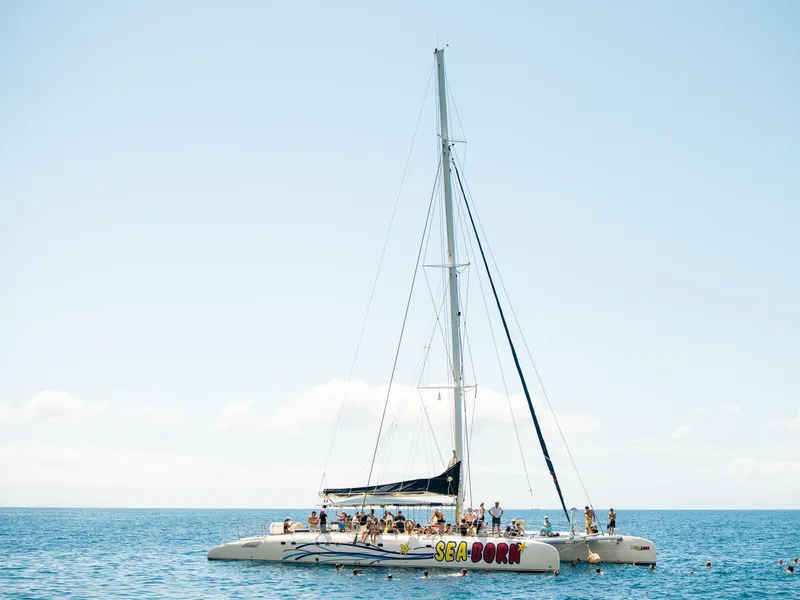 from $40.00
Funchal Dolphin and Whale Watching Catamaran Cruise
A round-trip catamaran cruise from Funchal marina in search of dolphins and whales, departing from the Seaborn Catamaran berth.
Check Availability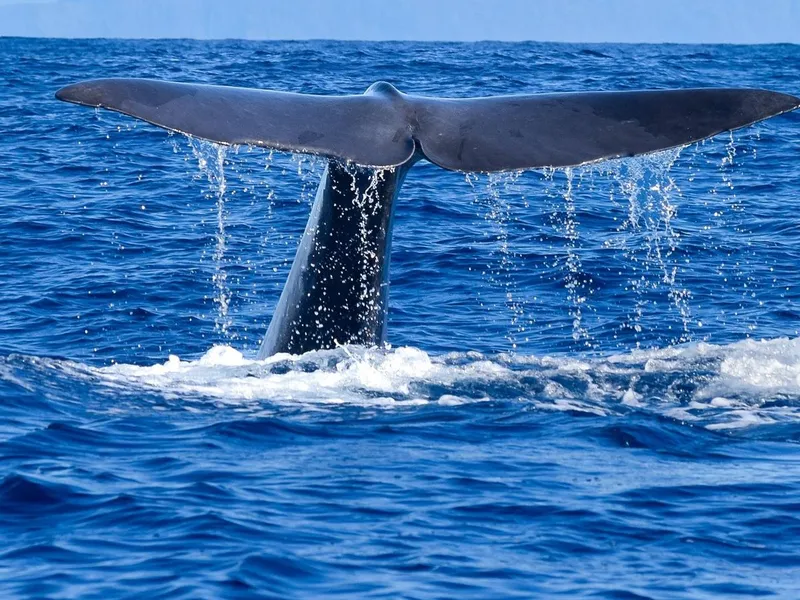 from $69.00
Madeira Responsible Whale and/or Dolphin Watching Tour
A small-group boat tour with naturalist or marine biologist guides and land-based spotters, run under the operator's own animal welfare rules.
Check Availability from $103.00
Desertas Islands Full-Day Catamaran Trip from Funchal
A full-day catamaran trip from Funchal out to the uninhabited Desertas Islands, with lunch served on board.
Check AvailabilityPrices, ratings and details are the platform's own. dollar figures are the listed prices — the platform bills in your account's currency.
What You Can See: 28 Species On The Record
The Madeira Whale Museum has confirmed 28 cetacean species in the archipelago, out of roughly 78 worldwide: 7 baleen whales and 21 toothed whales. Visit Madeira adds a shorter list of the animals you are most likely to meet, which also includes the loggerhead turtle. The table below puts both lists together so you know what a whale watching trip here can realistically deliver.
The first column is what you might see, the second sorts whales from dolphins and turtles, and the third quotes the source. Nothing here is our own speculation, the figures come from the museum's science page and Visit Madeira's activity page.
| Species | Group | What the sources say |
|---|---|---|
| Common dolphin | Toothed whale | On Visit Madeira's most frequently seen list. The Whale Museum says it is seasonal |
| Atlantic spotted dolphin | Toothed whale | On Visit Madeira's most frequently seen list |
| Bottlenose dolphin | Toothed whale | On Visit Madeira's most frequently seen list. The Whale Museum says it is present all year |
| Sperm whale | Toothed whale | On Visit Madeira's most frequently seen list |
| Short-finned pilot whale | Toothed whale | On Visit Madeira's most frequently seen list |
| Bryde's whale | Baleen whale | On Visit Madeira's list. The museum has seen them feeding and confirmed calves |
| Fin whale | Baleen whale | The museum has seen them feeding and confirmed calves |
| Sei whale | Baleen whale | The museum has seen them feeding in these waters |
| Loggerhead turtle | Sea turtle | On Visit Madeira's most frequently seen list |
Seasonal Or Resident
The museum draws one clear line. Some species are seasonal, and the common dolphin is the named example. Others are present all year, and the bottlenose dolphin is the named example.
Large baleen whales use these seas in passage or seasonally, and some individuals stay several months. That is the full extent of official seasonality data. Beyond those two statements, no official source ranks months.
Sea depth reaches 3000 metres in places, which is why deep-diving sperm whales feed here. The museum notes more species may be recorded as observation effort grows.
Sources: Madeira Whale Museum, Baleias e Golfinhos. Visit Madeira, Dolphin and Whale Watching.
The Rules Every Licensed Boat Follows
Decreto Legislativo Regional 15/2013/M of 14 May 2013 regulates the watching of cetaceans, the monk seal, sea turtles and seabirds in Madeira. Every commercial operator needs authorisation from the Parque Natural, must be a licensed tourism-activity or maritime-tourism company, and must carry a trained technician and an onboard guide. The table below pulls the numbers every licensed boat must respect, with the article of the law each figure comes from.
These are not courtesy guidelines. They are regional law, and they change what happens on the water: your boat slows down near animals, it cannot linger, and it cannot get close. Where the table says Area I, that is the south coast between the eastern limit of Santa Cruz and Calheta, the stretch where Funchal trips operate.
| Rule | Figure | Source article |
|---|---|---|
| No active approach closer than this to a marine mammal or pelagic seabird | 50 m | Article 8 |
| Minimum distance for turtles | 25 m | Article 8 |
| Time one boat may stay in the observation area | 10 minutes | Article 8 |
| Total time for all boats together | 40 minutes | Article 8 |
| Speed limit between 300 and 100 m from animals | 12 knots | Article 7 |
| Speed limit between 100 and 50 m | 8 knots | Article 7 |
| Boats waiting outside must wait this long after the last boat leaves | 120 minutes | Article 7 |
| Area I, boats allowed within 100 m, and within 300 m | 2 and 2 | Article 7 |
| Area I, boats allowed between 300 and 500 m | Up to 4 | Article 7 |
| Area II, boats allowed at each distance ring | 1, and up to 2 between 300 and 500 m | Article 7 |
| Underwater observation of dolphins, maximum observers holding the boat on a line | 4, common dolphin and Atlantic spotted dolphin only | Article 6 |
| Overflight minimum altitude and distance | 300 m altitude, 150 m distance | Article 6 |
What Is Outright Banned
The law bans chasing animals, separating groups or isolating calves, touching them, throwing objects at them, pets on board, sonar, night watching, and aircraft, jet skis and underwater vehicles as observation platforms except for science or authorised filming. Entering the water to interact with marine mammals or turtles is banned, and swimmers may not actively approach or swim with marine mammals. Approach must be at about 30 degrees from the side-rear, never head-on.
- No chasing, no separating groups, no isolating calves
- No touching, no throwing objects, no pets on board
- No sonar, no night observation, no aircraft or jet skis as watching platforms
- No entering the water to interact, no swimming with marine mammals
Boats And Trips Are Capped
Portaria 46/2014, as amended by Portaria 13/2015, sets how many whale-watching boats may exist at all. The caps apply per group of harbours. Each boat may run at most 3 trips a day, boats should preferably work near their own harbour, and using another harbour is limited to 10% of operations with prior notice.
Portaria 336/2022 of 27 June sets the criteria when demand exceeds capacity.
| Harbours | Maximum authorised boats |
|---|---|
| Machico, Santa Cruz, Funchal and Câmara de Lobos | 25 |
| Ribeira Brava, Ponta do Sol and Calheta | 7 |
| Porto Moniz and São Vicente | 6 |
| Porto Santo | 4 |
Sources: IFCN, DLR 15/2013/M full text. IFCN legislation page.
Can You Swim With Dolphins In Madeira?
This is where Madeira differs from several other destinations, and where marketing and law collide. The regional law answers the question directly, and the answer is mostly no.
The Ban
Decreto Legislativo Regional 15/2013/M bans entering the water to interact with marine mammals or turtles, and it bans swimmers from actively approaching or swimming with marine mammals. So a free swim among dolphins is not legal in Madeira. If a trip sells open swimming with dolphins here, that should make you ask questions, because the activity as described would break the regional regulation.
The four tours on this page do not advertise swimming.
The One Exception
Underwater observation of cetaceans is allowed for exactly two species: the common dolphin and the Atlantic spotted dolphin. Even then, at most 4 people may take part, they hold on to the boat and are attached to a line. That is structured underwater observation, not a free swim.
It is a narrow exception in a law that otherwise keeps swimmers out of the water with these animals.
Source: IFCN, DLR 15/2013/M full text.
When To Go: What Is Published And What Is Not
Search results promise a best month for whale watching in Madeira. The official sources do not. Here is what actually exists, and the honest gaps.
Visit Madeira calls whale watching a year-round activity, with daily departures from Funchal marina all year, and also describes departures from Calheta, Machico and Porto Santo. That is the season statement. The Madeira Whale Museum publishes no month-by-month sighting calendar and no sighting odds.
Visit Madeira publishes none either. Nobody official tells you that April beats October or the reverse, so be wary of any page that does.
The Two Seasonal Facts That Exist
From the Whale Museum: the common dolphin is seasonal, and the bottlenose dolphin is present all year. Large baleen whales pass through or stay seasonally, with fin, Bryde's and sei whales seen feeding and calves confirmed for fin and Bryde's. That is the whole official picture on seasonality.
For planning around sea state and wind, use our best time to visit Madeira page and the Madeira weather guide, since operators cancel in unsafe seas.
Sources: Visit Madeira, Dolphin and Whale Watching. Madeira Whale Museum.
From Whaling Station To Sanctuary
Madeira hunted the same animals it now watches. The Whale Museum in Caniçal tells that story, and the museum visit is the natural pairing with a boat trip.
Visiting The Madeira Whale Museum
The museum sits in Caniçal on the east coast, in Machico municipality, on the other side of the island from the whale-watching berths at Funchal marina. The table below is the museum's own tariff and opening block, so you can price a rainy afternoon against a boat trip. It has run the cetacean stranding network RACAM since 1996, and its 24-hour line takes reports of stranded animals.
| Ticket or detail | What the museum publishes |
|---|---|
| Adult | $17.22 (€15) |
| Child 6 to 11 | $8.61 (€7.50) |
| Youth 12 to 17, students, over 65 | $11.48 (€10) |
| Open | Tuesday to Sunday 10:00-18:00, last recommended entry 16:30 |
| Free entry days | 18 May and 27 September |
| Stranding line | 291 961 859 or 924 432 091, 24 hours |
How The Hunt Ended
Sperm whale hunting arrived in the early 1940s with lookouts and crews from the Azores. The first sperm whales were killed off Porto Moniz on 2 February 1941 and processed at Ribeira da Janela. A factory followed in Caniçal at the end of the 1940s.
Lookout posts covered the seas up to 15 miles out. Hunting ended voluntarily in 1981, and from 1986 the regional decree DLR 6/86/M made the waters out to 200 miles a sanctuary for whales, dolphins and the monk seal.
Sources: Museum tariffs and hours. History of the whale hunt.
Whales In Madeira In Dated Lines
-
1940
Early 1940s: sperm whale hunting arrives with lookouts and crews from the Azores (Whale Museum)
-
1941
2 February 1941: first sperm whales killed off Porto Moniz, processed at Ribeira da Janela (Whale Museum)
-
1942
A new processing station is built at Garajau (Whale Museum)
-
1944
EBAM, the archipelago's whaling company, is founded, and later builds the Caniçal factory (Whale Museum)
-
1981
Hunting ends voluntarily (Whale Museum)
-
1986
DLR 6/86/M makes the waters to 200 miles a sanctuary for whales, dolphins and the monk seal (Whale Museum)
-
1996
The museum takes over the stranding network RACAM (Whale Museum)
-
2013
14 May 2013: DLR 15/2013/M regulates watching of marine vertebrates (IFCN)
-
2014
22 April 2014: Portaria 46/2014 caps the number of whale-watching boats (IFCN)
-
2015
14 January 2015: Portaria 13/2015 raises the caps (IFCN)
Five Things Most Visitors Do Not Know About Whale Watching In Madeira
Small facts that change how you book and what you do on the water, each one traceable to an official source.
Read these before you pick a boat. Three of the five are legal limits, two are about the animals themselves.
- Your boat is legally limited to 10 minutes in the observation area, and all boats together to 40 minutes, so a patient guide matters more than a fast boat IFCN, DLR 15/2013/M.
- There is no public fee for watching whales. The state caps boats and time instead, at most 25 authorised boats across the four southern harbours and 3 trips a day per boat IFCN legislation page.
- Calves of fin and Bryde's whales have been confirmed in these waters, meaning some baleen whales breed here, not just pass through Whale Museum.
- Swimming with dolphins is banned, with a single narrow exception for underwater observation of two species, 4 people maximum, holding a line IFCN, DLR 15/2013/M.
- If you find a whale or dolphin stranded on a beach, the 24-hour RACAM line is 291 961 859 or 924 432 091, and you should never cover the blowhole of a live animal or put sunscreen on it Whale Museum.
Sources: IFCN legislation. Madeira Whale Museum.
How Much Time To Give Whale Watching
Three realistic routings, using only the durations printed on the tour listings. Durations are the listings', not an official figure.
The table compares a standard catamaran morning, a small-boat trip with a biologist, and the full Desertas day, all departing Funchal marina.
| Routing | Duration | What it looks like |
|---|---|---|
| Catamaran morning | 2 hours 30 minutes (tour listing) | Depart Funchal marina on the Ecological Catamaran, watch with land-based spotters directing the route, back before lunch |
| Small boat with a biologist | 2 hours (tour listing) | The Responsible Whale Watching Tour from Blue Safari, a smaller boat and naturalist or marine biologist guides |
| Desertas day | 9 hours (tour listing) | The full-day Desertas catamaran with lunch on board, a whole day given to the sea and the uninhabited islands |
Pairing It With The Rest Of Funchal
A 2 to 3 hour trip leaves most of a day free. The marina sits within walking range of Funchal's old town, and the evening suits Funchal at night. Our estimate: book the morning departure so wind, which often rises later in the day, matters less, then keep the afternoon for the town.
Source: durations as printed on the tour listings on this page.
On A Whale Watching Boat: What To Do, And What Not To
Most of this is law, not etiquette. The regional regulation binds every licensed boat and its passengers.
Do
- Book 2 days ahead and pick a morning slot, since operators cancel in unsafe seas
- Choose a licensed operator, which by law carries a trained technician and an onboard guide
- Keep 50 metres in your head as the legal minimum approach to any marine mammal
- Follow the guide's instructions on where to sit and when to stay quiet near animals
- Visit the Whale Museum in Caniçal to put the species you saw into context
Don't
- Do not book any trip selling a free swim with dolphins, that activity is banned
- Do not throw objects at animals, touch them, or bring pets on board, all banned
- Do not ask the crew to chase or follow animals leaving, chasing is illegal
- Do not fly a drone from the boat, aircraft are banned as observation platforms
- Do not touch a stranded animal on a beach, call the RACAM line instead on 291 961 859
Where Whale Watching Boats Leave From
Four points cover the whale watching in Madeira picture: the Funchal marina departure point, the Whale Museum in Caniçal, the Desertas Islands day-trip destination, and Calheta, which Visit Madeira lists as a whale-watching base.
Coordinates from the listed sources for each point.
Near The Marina
Three places that pair naturally with a boat day from Funchal.
Desertas Islands
The uninhabited islands southeast of Madeira, 22 nautical miles from Funchal, home to a small Mediterranean monk seal colony. They are the destination of the full-day catamaran on this page.
Porto Santo
The second inhabited island of the archipelago, reached by ferry from Funchal. Its harbour holds a cap of 4 authorised whale-watching boats under the regional rules.
Funchal
Madeira's capital and the departure point for every tour compared here here. The marina sits below the city centre, an easy walk from the old town.
Whale Watching In Madeira Questions
Can you see whales in Madeira all year?
Visit Madeira calls whale watching a year-round activity with daily departures from Funchal marina. The Whale Museum says the bottlenose dolphin is present all year while the common dolphin is seasonal. No official source publishes sighting odds by month.
Which month is best for whale watching in Madeira?
Nobody official says. The Madeira Whale Museum publishes no month-by-month sighting calendar and no sighting odds, and neither does Visit Madeira. The only published seasonal statements are the common dolphin being seasonal and the bottlenose dolphin being year-round. Check Madeira weather for sea conditions instead.
Can you swim with dolphins in Madeira?
No. Regional law bans entering the water to interact with marine mammals and bans swimmers from swimming with them. The only exception is underwater observation of the common dolphin and Atlantic spotted dolphin, with at most 4 people holding on to the boat and attached to a line.
What are the chances of seeing dolphins in Madeira?
Not stated. No official source publishes sighting odds. Visit Madeira's most frequently seen list includes the common dolphin, Atlantic spotted dolphin and bottlenose dolphin, and 28 cetacean species are confirmed in these waters, but no percentage is published anywhere official.
How much does whale watching in Madeira cost?
The tours on this page list from $40.00 for a 2 hour 30 minute catamaran trip, $69.00 for a 2-hour small boat with a biologist, and $103.00 for the 9-hour Desertas day. There is no public fee for watching, the law caps boats and time instead.
How close can boats get to whales in Madeira?
The law forbids an active approach closer than 50 metres to any marine mammal, and 25 metres for turtles. One boat may stay 10 minutes in the observation area, all boats together 40 minutes.
Is whale watching in Madeira suitable for wheelchair users?
The Ecological Catamaran listing says two of its onboard toilets are wheelchair accessible, though boarding access is not otherwise described. The Seaborn catamaran and the Desertas day listings state they are not suitable for wheelchair users.
Where Whale Watching Fits In A Day
The morning works best. The 2 hour 30 minute Ecological Catamaran from Funchal marina puts you back on the quay before lunch with most of the day left, and the marina is an easy walk from Funchal old town, where a lunch stop and the painted doors of Rua de Santa Maria fill the early afternoon. If you would rather trade money for expertise, the 2-hour small boat with a marine biologist does the same job in a tighter window. Save Funchal at night for after, or ride the Funchal cable car up to Monte for the late light.
The full-day option is different in kind. The 9-hour Desertas catamaran takes your whole day, with lunch on board and the uninhabited islands as the turn-around point. Landing there needs a separate permit and is not part of the cruise. Our estimate: give that trip its own day in your plan, and keep a normal morning trip for a day when you also want time in town. Pair either with the Whale Museum in Caniçal on a different day, it is closed on Mondays.
Whale And Dolphin Watching In Madeira On Film
Three films from boats off Madeira, so you can see how close the law actually lets a boat get and what a sighting looks like from the deck.
Madeira's BEST whale watching experience!
A trip filmed on board with sightings off the south coast.
Video: Lobosonda - Madeira Whale WatchingIncredible Whale Watching Experience in Madeira
A traveller's own footage of a whale and dolphin trip from the marina.
Video: STAY CLASSY VLOGWe went dolphin and whale watching in Madeira
What a standard catamaran trip looks like from booking to the first dolphins.
Video: SeaBookingsVideos load from YouTube only when you press play.
Prices, hours and terms are set by the venue or operator and confirmed at checkout.
We may earn a commission if you book through one of our links, at no extra cost to you. Full affiliate disclosure