 Madeira Trip Guide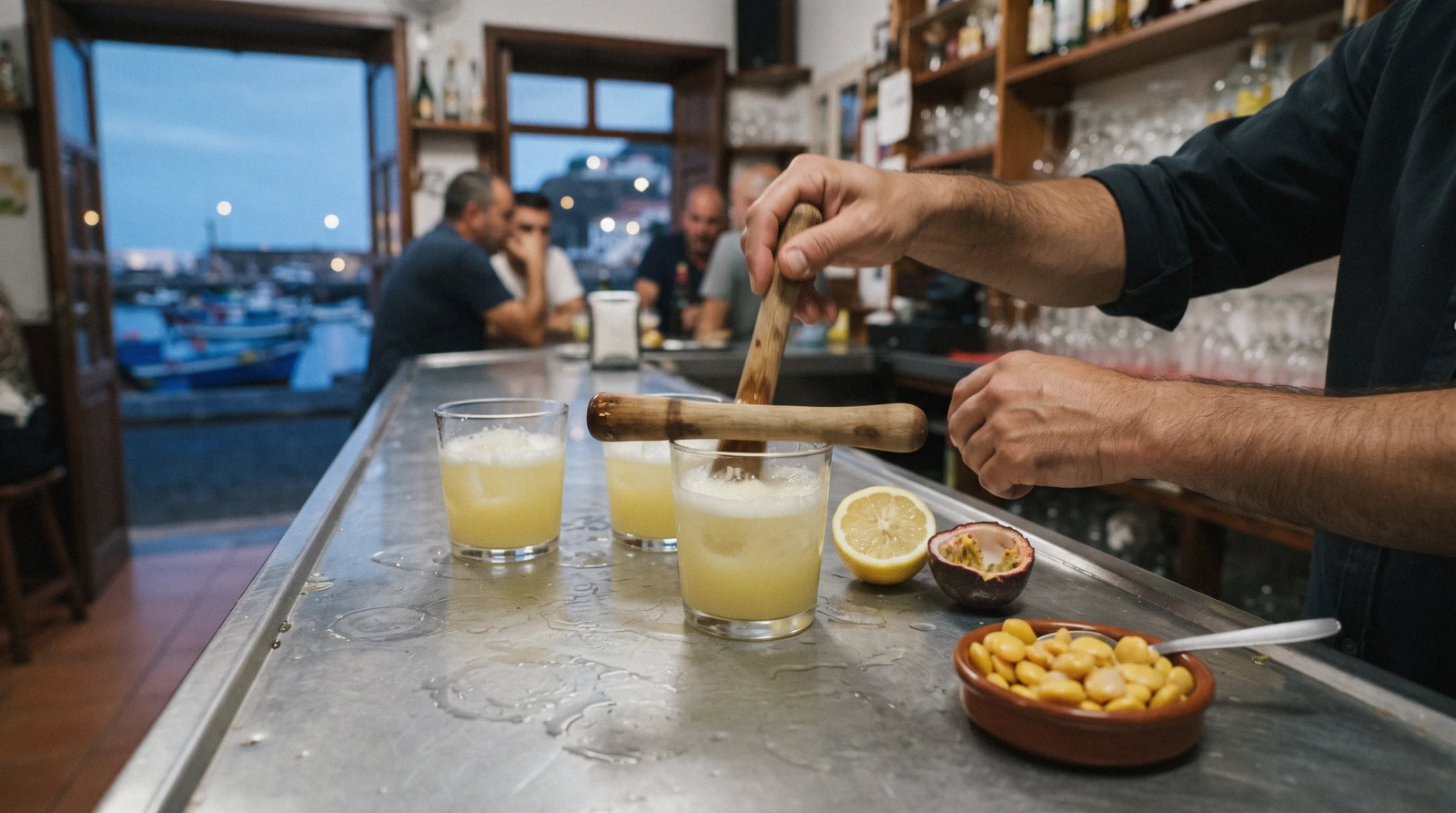
Poncha: Madeira's Sugarcane Drink, Explained
Poncha has held to the same 3 ingredients since the 18th century: sugar cane spirit, honey and lemon, stirred hard with a wooden stick called a mexelhote until the glass turns cloudy. It started in Câmara de Lobos as a fisherman's drink in the 18th century and it is now poured in bars across Madeira and Porto Santo. This page sets out what goes in it, what nobody officially publishes about its strength, and how to order it well, alongside our guide to the island and the dish list on typical Madeira food.
Quick answer What poncha is, in three lines
Poncha always contains aguardente de cana, the sugar cane spirit, and it is always stirred with a wooden mexelhote, the little muddler that gives the drink its texture. Visit Madeira's recipe line is sugar cane spirit, honey and lemon, and the original version, poncha à pescador, was made in Câmara de Lobos to warm fishermen on long cold nights at sea. The common variations swap the lemon for passion fruit, tangerine, English tomato or mint.
Key takeaways
- Treat it as a spirit, not a juice: the sugar cane spirit behind it is at least 37.5% alcohol by volume, and no authority publishes the strength of the finished glass. See how strong poncha is.
- Taste several with a guide on the Funchal food and wine walking tour, which lists 6 drinks alongside 11 food tastings.
- The drink was born in Câmara de Lobos, and the busiest place to drink it now is the old town on a Funchal evening.
Poncha Styles Compared
Every style below is one Visit Madeira names on its poncha and traditional drinks pages. The taste column describes only what the listed ingredients imply, because no official page publishes tasting notes, and no official page publishes a price or an alcohol strength per style either.
| Style | What goes in | Taste it gives | Order it when |
|---|---|---|---|
| Poncha à pescador | Sugar cane spirit, honey, lemon | Sharp and honeyed, the strongest tasting of the spirit | You want the original, as the fishermen drank it |
| Passion fruit poncha | Sugar cane spirit with passion fruit | Tropical and tart, the fruit softens the spirit | It is your first poncha, or the afternoon is hot |
| Tangerine poncha | Sugar cane spirit with tangerine | Sweeter and rounder than the lemon version | You find lemon too sharp |
| English tomato poncha | Sugar cane spirit with English tomato, the tamarillo | The odd one out, savoury edged | You have already tried the other three |
| Mint poncha | Sugar cane spirit with mint | Herbal and cooler on the palate | You want something lighter after dinner |
| Nikita, not a poncha | Ice cream, pineapple, pineapple juice and pale beer | Creamy and tropical, a soft drink version exists | A beach afternoon rather than a bar night |
| Wine with laranjada | Wine mixed with laranjada, the 1872 soft drink | Diluted and sweet, the festival mix | You are at a summer arraial with espetada |
Styles from Visit Madeira's poncha page and its typical and traditional drinks page. Figures current in Q3 2026.
What Poncha Is: Spirit, Honey, Lemon and a Stick
Two things are never left out of a poncha, and knowing them is enough to tell a real one from a cocktail sold to tourists.
The Two Things That Are Never Optional
The first is aguardente de cana, the spirit distilled from sugar cane juice. The second is the mexelhote, a small wooden tool used to stir the mixture vigorously, which is what gives poncha its texture and its cloudy look. A poncha shaken in a cocktail shaker, or built on vodka or white rum from elsewhere, is something else.
Visit Madeira's short recipe line is sugar cane spirit, honey and lemon. Bars build on that base, and the result is served in a characteristic glass, usually small and straight sided.
- Aguardente de cana: the sugar cane spirit, never optional
- The mexelhote: the wooden stirrer that makes the texture
- Honey and lemon: the base of the original
- The glass: a small characteristic glass, not a cocktail coupe
The Dentinho
A round of poncha is often served with a dentinho, a complimentary treat from the house. It can be peanuts, lupin beans or a small portion of a traditional delicacy. It is not a garnish, it is there to slow the drinking down, and refusing it is a small mistake.
If you want more than a snack with your drinks, the dish list this island builds a meal from is on our typical Madeira food page.
Sources: Visit Madeira, poncha and typical and traditional drinks.
How Strong Is Poncha? The Only Official Number
This is the question people ask most, and the honest answer is a negative finding, so here it is plainly with the one figure that does exist.
37.5% Is the Spirit, Not the Drink
Madeira Rum, which Visit Madeira also calls sugar cane spirit and which is the raw material of poncha, has a minimum alcohol content of 37.5% by volume, and every bottle is certified by the regional institute IVBAM. That is the only published alcohol figure in this chain.
No official body publishes the strength of a finished poncha. There is no regulated recipe, no fixed measure of spirit to honey, and no ABV printed on a bar's board. Each bar mixes its own, which is why two ponchas in two streets can feel completely different. Treat the glass in front of you as a spirit drink of unknown strength, not as a fruit juice with a splash in it.
What That Means for Your Day
Two practical consequences, and both are ours rather than any authority's. First, do not drive after a round. Madeira's roads are steep, narrow and full of blind bends, and the return leg of an evening is not the place to test that. Taxi fares at the night tariff are on our Madeira taxi page.
Second, poncha and an early trail start do not mix. Sunrise trips leave in the dark and the classified trails need a booked slot you pay for even if you never show up, which is set out on Madeira trail fees. If tomorrow is a mountain day, the round after the first one is the one to skip. Anything health related, including the pharmacy and hospital detail, sits on Madeira safety and health.
Source: Visit Madeira, Madeira Rum. No official source publishes a finished poncha's alcohol strength.
From Panche to Poncha À Pescador
Poncha is older than most island drinks and it arrived by sea, like almost everything else here. The table below sets out the documented milestones of sugar cane and the drink made from it, with the source for each line.
The story starts with the raw material rather than the drink. Sugar cane arrived on Madeira within decades of settlement and made the island rich before wine did. Poncha appears much later, as an adaptation of something the English brought back from India, and only becomes an industry once distilling equipment reaches the island at the end of the 19th century.
| When | What happened | Source |
|---|---|---|
| 15th century | Sugar cane introduced from Sicily through stakes brought by Portuguese navigators | Visit Madeira, Madeira Rum |
| 15th and 16th centuries | Sugar becomes the island's main export, known as white gold, and a transformation industry grows around it | Visit Madeira, Madeira Rum and regional products |
| 18th century | Panche, brought from India by the English, is adapted on Madeira. The first poncha is made in Câmara de Lobos for fishermen | Visit Madeira, poncha |
| End of the 19th century | The first sugar cane spirit distillation devices appear on the island | Visit Madeira, Madeira Rum |
| 20th century | The shutdown of important industrial units causes a decline in production | Visit Madeira, Madeira Rum |
| Since the turn of the century | Demand rises substantially and Madeira Rum becomes sought after abroad | Visit Madeira, Madeira Rum |
Why the Fisherman's Version Is the Original
The first poncha appeared in the fishing village of Câmara de Lobos, made to warm fishermen through long and chilly nights at sea. That is why it is called poncha à pescador, the fisherman's poncha, and Visit Madeira treats it as the original from which every other version descends.
The same town is the centre of the black scabbardfish tradition and the home of nikita, so a morning there covers three island specialities at once. The town guide is Câmara de Lobos.
Sources: Visit Madeira, poncha and Madeira Rum.
Aguardente De Cana: The Spirit Behind Poncha
If poncha is the drink, aguardente de cana is the thing worth understanding, and the thing worth buying if you want to make it at home.
What It Is and How It Is Certified
Madeira Rum comes exclusively from the alcoholic fermentation and distillation of sugar cane juice, not from molasses, and it has a minimum of 37.5% alcohol by volume. The range runs from natural rum, which is the raw material for poncha, to versions aged in oak barrels. All of it is certified by IVBAM, the regional institute for wine, embroidery and handicraft, which does the same job for Madeira wine.
The aged bottles are a sipping spirit rather than a poncha base. If you want one thing to carry home from the drinks side of the island, the choice is between an aged rum and a bottle of Madeira wine.
Where Visit Madeira Says You Can Buy It
Two producers appear on Visit Madeira's own Madeira Rum page under where to buy: Engenho Novo da Madeira, in the Parque Empresarial da Calheta on the west of the island, and J. Faria & Filhos, at Travessa do Tanque 85/87 in Funchal. Those are the only two the official page lists, so they are the only two named here.
For shops in general, including what is worth carrying home and what the airport rules make awkward, read Madeira shopping. The Calheta side of the island is covered on our Calheta page.
- Engenho Novo da Madeira, Parque Empresarial da Calheta
- J. Faria & Filhos, Travessa do Tanque 85/87, Funchal
Source: Visit Madeira, Madeira Rum.
Taste Poncha on a Tour
None of these listings promises poncha by name except through its drinks count, so read what each one actually includes. The Funchal food and wine walk lists 11 food tastings and 6 drinks in 3 hours 30 minutes for a group limited to 10. Taste Funchal lists all food and drink tastings on its 4 hour route, with vegetarian, gluten-free and non-alcoholic options available. The eastern island day at $40.00 includes a rum tasting at Porto Cruz, which is the spirit rather than the mixed drink. All four cancel free up to 24 hours in advance for a full refund.
 from $109.00
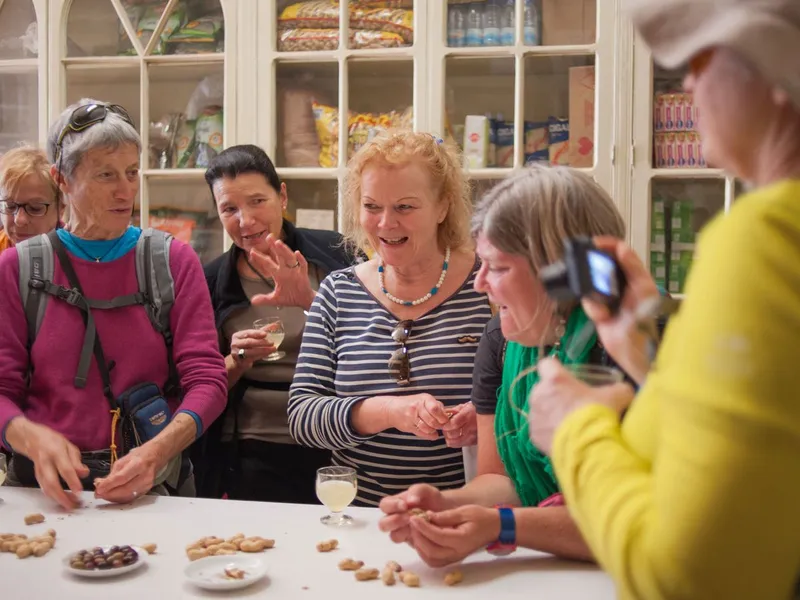
Madeira Food and Wine Walking Tour in Funchal
A small-group Funchal food and wine walk with 11 food tastings and 6 drinks across local taverns and the market, limited to 10 guests.
Check Availability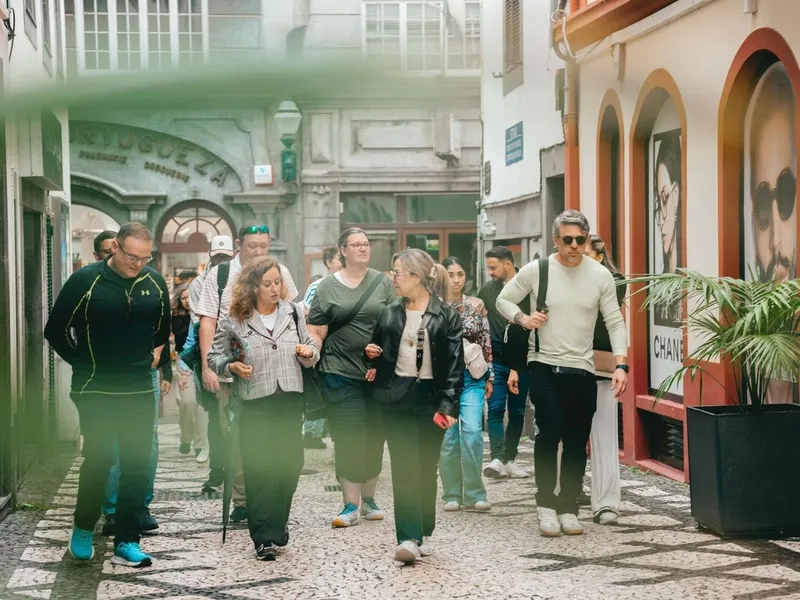 from $107.00
Taste Funchal: Food, Wine and Cultural Tour
A 4 hour Funchal food, wine and culture walk from Rua do Sabão, with vegetarian and gluten-free tasting options.
Check Availability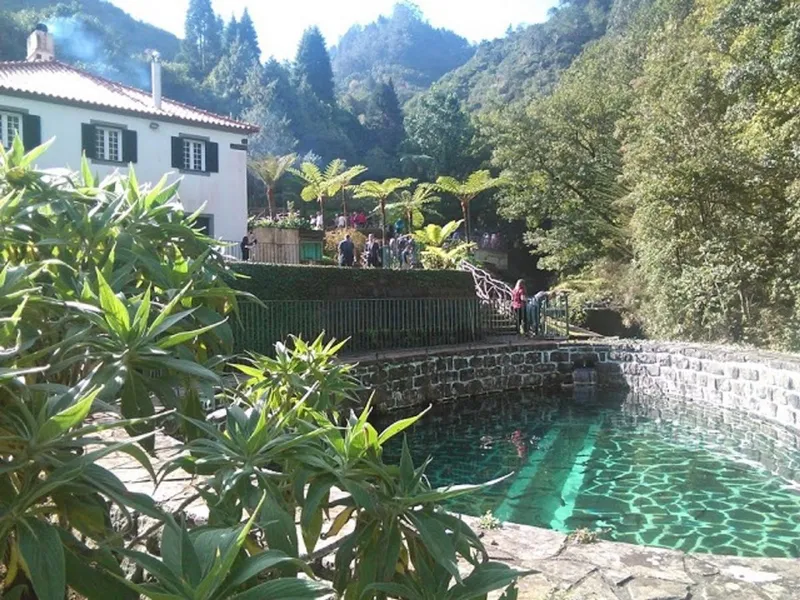 from $40.00
Eastern Madeira Full-Day Tour with Rum Tasting
An 8 hour eastern Madeira circuit with the Balcões walk, Santana's thatched houses, a rum tasting at Porto Cruz and free entry to the Guindaste skywalk.
Check Availability from $19.00
Funchal Old Town Walking Tour
A 2 hour small-group walk through Funchal's Old Town, the Jesuits' College, the Farmers' Market, a wine lodge and a historic sweet factory.
Check AvailabilityPrices, ratings and details are the platform's own. dollar figures are the listed prices — the platform bills in your account's currency.
How Poncha Is Made at Home
This is the part where most pages invent measurements. Visit Madeira gives ingredients and a method, not quantities, so that is what you get here.
The Documented Method
Take aguardente de cana, honey and lemon juice. Put them in the glass or jug, then stir vigorously with a wooden mexelhote until the mixture turns cloudy and the honey is fully worked in. That stirring is the technique, and it is the reason a mexelhote is sold in every souvenir shop on the island.
For the variations, the fruit replaces the lemon: passion fruit, tangerine, English tomato or mint. Nothing else in the build changes.
- Aguardente de cana, honey, lemon juice
- Stir hard with a mexelhote until cloudy
- For a variation, swap lemon for passion fruit, tangerine, English tomato or mint
- Serve in a small glass, with a snack beside it
What We Will Not Print
No official source gives a ratio, a measure in millilitres or a resting time, so this page prints none. Every recipe online that does is somebody's own version, and since the spirit is at least 37.5% alcohol by volume, guessing a ratio is how a home poncha ends up twice the strength of the bar version.
The practical answer, and it is ours: buy the spirit from one of the two listed producers, watch how a bar builds one first, and copy the proportions you saw.
Sources: Visit Madeira, poncha and Madeira Rum. Quantities are not published by either page.
Where to Drink Poncha Without a Ranking
No official list ranks poncha bars on Madeira, so this guide names none. What the official pages do say is where poncha is poured, and that is more useful than a top ten copied between blogs.
Everywhere, and Three Places in Particular
Visit Madeira states that poncha is prepared in most bars and restaurants across Madeira and Porto Santo, which means the drink is never more than a street away. Its nightlife pages then say that Funchal's old town is the epicentre of the city's night out, and that two elements are never missing from the bars there: fun and poncha.
The second place is Câmara de Lobos, the fishing town where the drink was invented, and the third is any summer arraial, the parish festivals held roughly between June and August, where poncha is poured alongside espetada and bolo do caco.
- Funchal old town: the city's night-out epicentre, poncha in every bar, see Funchal at night
- Câmara de Lobos: where poncha à pescador was first made
- Summer arraiais, usually June to August: poncha with espetada in the street
- Porto Santo: poncha is poured there too, see our Porto Santo guide
Why No Bar Is Named
The naming rule on this site is simple: a bar or restaurant gets named when a citable list names it, like the MICHELIN Guide, or when the venue's own site is the source. No official body publishes a poncha bar list, and the ten-venue directory Visit Madeira keeps is a directory of nightlife venues, not a ranking and not a poncha guide.
So pick by the street rather than the sign: the old town lanes for the first round, then whichever bar has locals in it. The island overview of where nights out actually happen is Madeira nightlife.
Sources: Visit Madeira, poncha and Funchal Downtown nightlife.
Five Things Most Visitors Do Not Know About Poncha
Five details from the official pages that change how you order, each with its source.
None of these is trivia. Each one settles a decision at the bar, from which glass to order to why the snack arrives without being asked for.
- Poncha is not a Madeiran invention from nothing: it adapts panche, brought from India by the English in the 18th century (Visit Madeira, poncha)
- The stirring tool has a name and a job. The mexelhote is what makes the texture, which is why poncha is stirred and never shaken (Visit Madeira, poncha)
- The free snack has a name too. A dentinho of peanuts, lupin beans or a small delicacy comes from the house with a round (Visit Madeira, poncha)
- The spirit in the glass is certified by the same regional institute that certifies Madeira wine, and it is at least 37.5% alcohol by volume (Visit Madeira, Madeira Rum)
- English tomato in the fourth variation is the tamarillo, one of the island's own fruits, not a salad tomato (Visit Madeira, poncha and regional products)
Sources: Visit Madeira, poncha, Madeira Rum and regional products.
Poncha Map: Where the Drink Began and Where the Spirit Is Made
Three pins: the town that invented poncha, the street where most visitors drink their first one, and the west-coast town where one of the two listed rum producers is based.
Coordinates from Wikidata and OpenStreetMap.
Where Poncha Leads Next
Three pages that carry on from the first glass.
Câmara de Lobos
The fishing town where poncha was invented and where the black scabbardfish tradition runs strongest. Half a morning from Funchal, and the harbour is the point of going.
Funchal at night
The old town lanes where most visitors drink their first poncha, with the painted doors, the bar streets and how to get back to your hotel afterwards.
Typical Madeira food
What to eat with it, from espetada on a bay laurel stick to bolo do caco, and the dentinho traditions that come with a round.
Poncha: Questions
What is a poncha in Madeira?
A drink made with aguardente de cana, the sugar cane spirit, with honey and lemon, stirred vigorously with a wooden mexelhote until cloudy. It dates to the 18th century and started in Câmara de Lobos as poncha à pescador. The variations are in the styles table.
How much alcohol is in poncha?
No official body publishes the strength of a finished poncha, because there is no fixed recipe and every bar mixes its own. The one published figure is for the spirit it is built on: Madeira Rum has a minimum of 37.5% alcohol by volume per Visit Madeira. Read the strength section before you plan the rest of the evening.
What is the best poncha bar in Funchal?
No official list ranks poncha bars, so this guide names none. Visit Madeira says poncha is poured in most bars and restaurants on Madeira and Porto Santo, and that the old town is the epicentre of Funchal nightlife. Pick by street rather than by sign, using where to drink it and Funchal at night.
Do you drink poncha straight?
It is already a mixed drink: spirit, honey and fruit worked together with the mexelhote, served in a small characteristic glass. You drink it as served, usually with a dentinho of peanuts or lupin beans from the house. Nobody tops it with ice or soda for you.
What is poncha made of?
Sugar cane spirit, honey and lemon in the original, with passion fruit, tangerine, English tomato or mint replacing the lemon in the common variations. Visit Madeira publishes no quantities, so our recipe section prints the method without invented measurements.
Can you buy poncha to take home?
The thing worth carrying home is the spirit rather than a pre-mixed bottle. Visit Madeira lists two producers under where to buy Madeira Rum: Engenho Novo da Madeira in the Parque Empresarial da Calheta and J. Faria & Filhos at Travessa do Tanque 85/87 in Funchal. Pack it in the hold, and see Madeira shopping.
Is there a non-alcoholic poncha?
No official non-alcoholic version exists, since the sugar cane spirit is the definition of the drink. The closest documented alternative is nikita, which has a version replacing the pale beer with a soft drink, and the Taste Funchal food, wine and cultural tour lists non-alcoholic tasting options.
Poncha on Film
Three films showing poncha being mixed, from a home kitchen to a Madeira bar, before you order your first one.
Poncha: Madeira Island's Cocktail
The drink built step by step, including the stirring that gives it its texture.
Video: Just Cook With Michael SantosThe Making of a Poncha, Madeira Island
A bar in Madeira mixing poncha with a mexelhote, filmed over the counter.
Video: Happy Budget TravelerMadeira PONCHA Regional
A short look at the regional poncha and the ingredients that go into it.
Video: Madeira Best - Tours & ActivitiesVideos load from YouTube only when you press play. Bars shown in the films are the creators' choices, not this guide's.
Prices, hours and terms are set by the venue or operator and confirmed at checkout.
We may earn a commission if you book through one of our links, at no extra cost to you. Full affiliate disclosure