 Madeira Trip Guide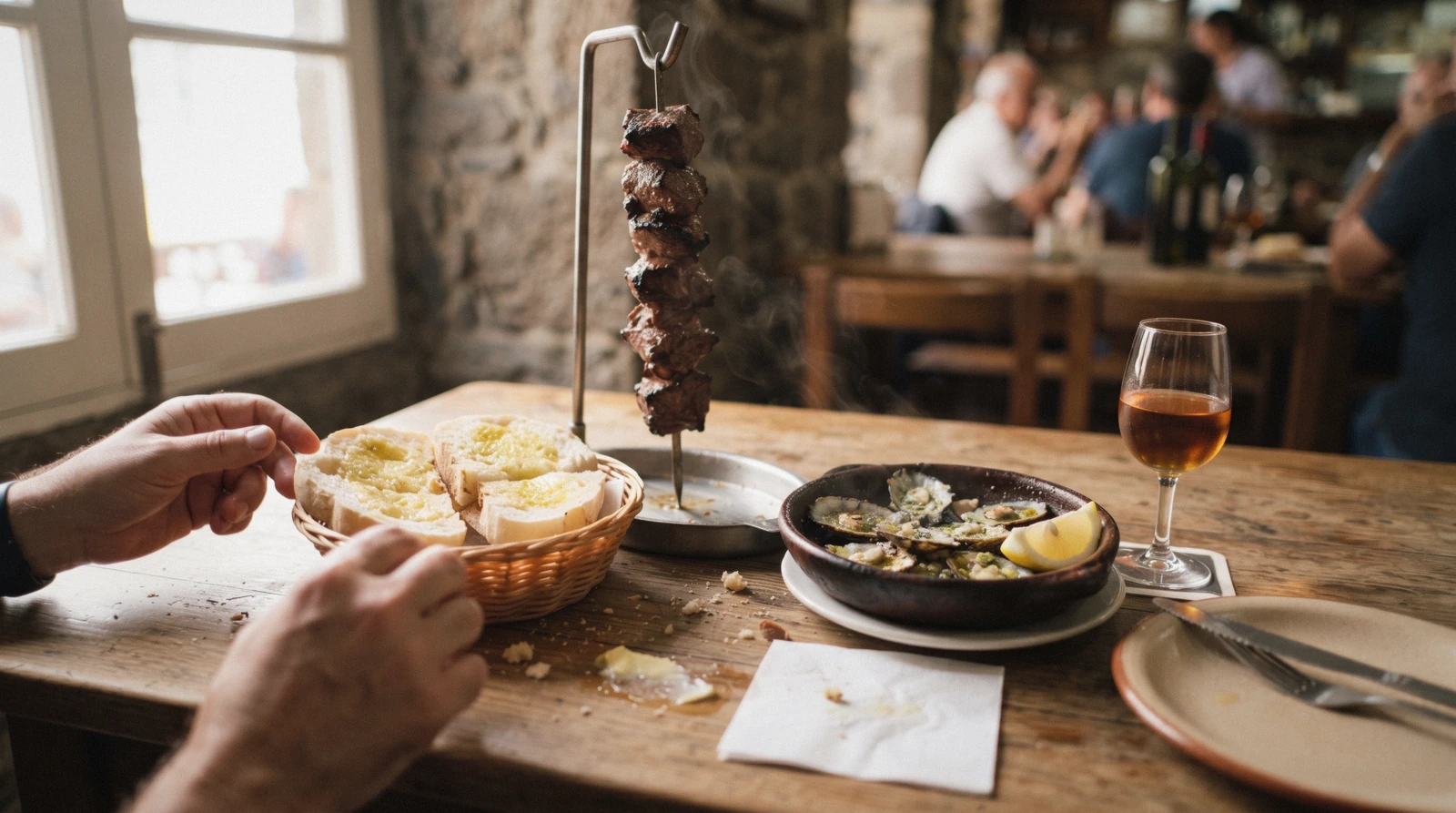
Traditional Madeira Food: The Dishes to Order
Traditional Madeira food is built on four ideas: beef roasted on a bay laurel stick, bread made with sweet potato and baked on a hot stone, deep-water fish from the Atlantic, and sugarcane in every form it takes. Every dish on this page is one the official tourism board documents, with nothing added from menus or blogs. Read it with our Madeira travel guide and then pick a table on where to eat.
Quick answer What to order in Madeira, in three lines
The core of traditional Madeira food is espetada, beef seasoned with garlic and bay leaf and roasted on a bay laurel stick over charcoal, served with fried cornmeal. Beside it come bolo do caco, a sweet potato bread cooked on a hot basalt stone, filete de espada, the breaded fillet of deep-water black scabbardfish, and grilled limpets served in the pan with garlic butter and lemon. The sweet end of the island is bolo de mel, the sugarcane honey cake that dates to the 15th century and keeps for months.
Key takeaways
- Order the whole list in one afternoon on the Funchal food and wine walking tour, 11 tastings and 6 drinks for a group of ten.
- The drink that comes with almost all of it is poncha, and the bottle to take home is Madeira wine.
- Eating with restrictions? Most classics are meat, fish or wheat: read gluten-free and vegan Madeira first.
- For actual tables, including the 12 MICHELIN Guide entries, use where to eat.
Madeira Dishes Compared: What, When and How to Order
Every dish below is documented by Visit Madeira, the official tourism board, on its traditional food pages. The table says what each one actually is, when you are most likely to meet it, and the sensible way to order it. No official source prints dish prices, which is why there is no price column.
| Dish | What it is | When you meet it | Order it as |
|---|---|---|---|
| Espetada | Beef with garlic and bay leaf, roasted on a bay laurel stick over charcoal | All year, and at every summer arraial | A main, with fried cornmeal and bolo do caco |
| Bolo do caco | Sweet potato bread cooked on a hot basalt stone, with garlic and parsley butter | All year, at almost every table | The bread basket, or a side for espetada |
| Prego no bolo do caco | Steak sandwich built on bolo do caco | All year, all hours | A light meal or a late snack |
| Filete de espada | Breaded and fried fillet of black scabbardfish from deep Atlantic water | All year, strongest in Câmara de Lobos | A main, with banana or passion fruit |
| Grilled limpets | Limpets served in the pan with garlic, butter, parsley and lemon | All year | A starter, with bolo do caco to mop |
| Carne de vinha d'alhos | Pork marinated several days in garlic, white wine and spices | Traditionally Christmas Eve, now all year | Plated, or stuffed into a papo-seco roll |
| Bife de atum | Tuna steaks marinated for hours, fried, the marinade becomes the sauce | All year | A main, with fried cornmeal |
| Picado regional | Shared platter of meat pieces in sauce with fried potatoes | All year, for a table of friends | One platter between everyone, with bread |
| Milho frito and milho cozido | Cornmeal, served creamy hot or set and fried in cubes | All year | The side that goes with espetada |
| Sopa de trigo | Creamy soup of pork, vegetables and wheat | All year, better in winter | A starter, or a light meal on its own |
| Panelo | Vegetables and sausages cooked together, close to cozido à portuguesa | Its festival is the penultimate weekend of January in Seixal | A winter plate in the north |
| Bolo de mel | Dark cake of sugarcane honey, butter, lard, walnuts, spices, Madeira wine and candied peel | Christmas by tradition, sold all year | Dessert, or a tin to take home |
| Queijada da Madeira | Flat curd cheese, egg and sugar tart | All year | With coffee, mid-afternoon |
| Malassadas | Fried dough finished with sugarcane honey | Carnival | Street food, eaten hot |
Dish facts from Visit Madeira's traditional food pages and its typical dishes and sweets pages. Figures current in Q3 2026.
The Main Plates: Espetada, Espada and Carne De Vinha D'Alhos
Three dishes carry the island's cooking, and each one comes with a rule about how it is served. Everything in this section is as Visit Madeira describes it, not as a menu translates it.
Espetada, the Bay Laurel Skewer
Espetada is chunks of beef seasoned with garlic and bay leaf and roasted over charcoal on a stick cut from bay laurel. Metal skewers are common now, and the flavour survives the swap, but the laurel version is the original and you will still see it hanging from a stand at the table. The partner is milho frito, cornmeal set firm then fried in cubes.
It was not always everyday food. Beef was costly, so espetada was a dish for religious celebrations, pilgrimages and local festivals, which is why it is still the food of every summer arraial. At those festivals you will see wine mixed with laranjada, a Madeiran soft drink produced since 1872, poured to soften the alcohol. That mix belongs to the party and rarely appears on a restaurant list.
Filete De Espada, the Deep-Water Fish
Espada is black scabbardfish, caught in deep Atlantic water, and the fishing tradition runs strongest in Câmara de Lobos, the harbour town west of Funchal. The fillet is breaded and fried, and the pairing is local rather than imported: Madeira banana or passion fruit goes on the plate with the fish.
If that combination sounds odd, order it once anyway. It is the single most Madeiran plate on any menu, and the fruit is the island's own, a banana with a PGI and passion fruit grown in three varieties here.
Carne De Vinha D'Alhos and Bife De Atum
Carne de vinha d'alhos is pork marinated for several days in garlic, white wine and spices. It is the Christmas Eve dish by tradition, though it is eaten all year now, either plated or pushed into a papo-seco roll. On 23 December it takes over the market in Funchal as a sandwich.
Tuna gets the same treatment in reverse. Bife de atum is tuna steaks marinated for hours in seasoning then fried in hot oil, and the marinade turns into the sauce. Tuna is abundant in the archipelago's waters, so this is an everyday plate rather than a special one.
Sources: Visit Madeira, espetada, filete de espada and carne de vinha d'alhos.
Bolo Do Caco, Limpets and the Rest of the Table
Around the main plates sits a second layer of food that visitors often miss because it arrives as a side, a starter or a shared platter. This is where most of the island's everyday eating happens.
Bolo Do Caco
Bolo do caco is bread made with sweet potato, which gives it the soft crumb and the faint sweetness. It was born in Porto Santo as a way of using leftover bread dough, and its name comes from the method: the dough is cooked on a very hot basalt stone, the caco, not in an oven. That is what gives the crisp crust and the light inside.
The default version comes split and spread with garlic and parsley butter. Fillings of chorizo or cheese are also common, and the same bread is the base of the prego, the steak sandwich that works as lunch, a late snack or the thing you eat standing up after a night out.
Grilled Limpets and Picado
Grilled limpets are the starter to order: served hot in the pan they were cooked in, with garlic, butter, parsley and a lemon to squeeze over, and bolo do caco alongside for mopping. They are a shellfish, so they are gone in five minutes and worth ordering two of.
Picado regional closes the meal the same way it opens it, with bread in the sauce. It is a platter of small pieces of meat coated in sauce and served with fried potatoes, meant to be shared across the table rather than plated per person.
Cornmeal and Soup
Milho cozido is cooked cornmeal, creamy when hot and firm once cooled, which is exactly why it becomes milho frito: the cooled block is cut and fried, and those cubes are the standard side for espetada across the island.
Sopa de trigo is the other everyday plate, a creamy soup whose recipe varies but usually holds pork, vegetables and wheat. In the north, the winter version of that idea is panelo, vegetables and sausages cooked together, celebrated at a festival in Seixal on the penultimate weekend of January.
Sources: Visit Madeira, bolo do caco, grilled limpets and typical dishes.
Madeira Desserts and Sweets
Madeira's sweet side runs on sugarcane honey, eggs and fruit, and much of it is seasonal. The table below lines up the documented sweets with their main ingredients and the time of year they belong to, all from Visit Madeira's own confectionery pages.
Two of these are worth planning for. Bolo de mel is the island's keeper: made with sugarcane honey, butter, lard, walnuts, spices, Madeira wine and candied peel, some recipes allowing up to three days of fermentation, and it lasts for months, which is why a Christmas cake outlives the season and why it is the sensible thing to carry home. Bolo preto is its darker cousin, with beer in the mix alongside the wine and the honey.
| Sweet | Main ingredients | Season |
|---|---|---|
| Bolo de mel | Sugarcane honey, butter, lard, walnuts, spices, Madeira wine, candied peel | Christmas by tradition, keeps for months |
| Broas de mel | Honey biscuits, crunchy outside and soft inside | All year, strongest at Christmas |
| Bolo preto da Madeira | Sugarcane honey, Madeira wine, beer, cinnamon, candied fruit | All year |
| Palitos de cerveja | A broa made with beer, crunchy and mildly sweet | Christmas |
| Malassadas | Fried dough, golden crust, sugarcane honey to finish | Carnival |
| Queijada da Madeira | Curd cheese, eggs, sugar, flat and soft | All year, with coffee |
| Pudim de maracujá | Passion fruit, smooth and creamy | All year |
| Mousse de anona | Cherimoya, light and creamy | When anona is in the market |
| Rebuçados de funcho | Fennel, handmade, yellow-orange, soothes a throat | All year |
| Lambecas | Ice cream, the symbol of Porto Santo, over 50 years of history | Beach days on Porto Santo |
The Two Sweets Tied to a Date
Palitos de cerveja are a Christmas broa, so asking for them in July is a way to be told no politely. Malassadas belong to Carnival, fried and finished with sugarcane honey while you wait. If your trip lands on either season, they are worth going out of your way for, and the dates sit on our Madeira events page.
Source: Visit Madeira, sweets and desserts and broas and bolo de mel.
Taste It With a Guide: Food and Wine Walks in Funchal
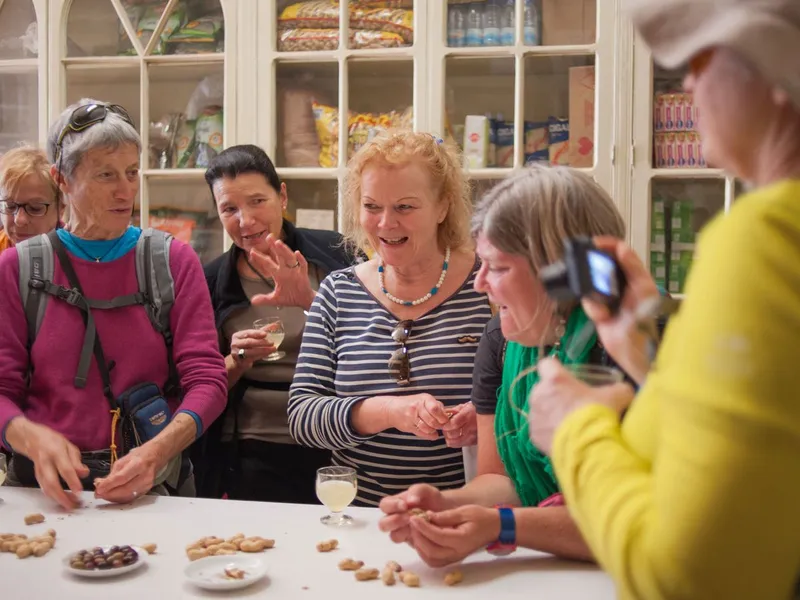
The fastest way through the dish list is a guided walk that puts eleven tastings in one afternoon instead of five dinners. The Madeira Food and Wine Walking Tour is listed at $109.00 for 3 hours 30 minutes with 11 food tastings and 6 drinks, limited to 10 participants. Taste Funchal runs $107.00 for 4 hours from Rua do Sabão and lists vegetarian, gluten-free and non-alcoholic tasting options. The eastern island day at $40.00 includes a rum tasting at Porto Cruz. All five listings cancel free up to 24 hours in advance for a full refund.
 from $109.00
Madeira Food and Wine Walking Tour in Funchal
A small-group Funchal food and wine walk with 11 food tastings and 6 drinks across local taverns and the market, limited to 10 guests.
Check Availability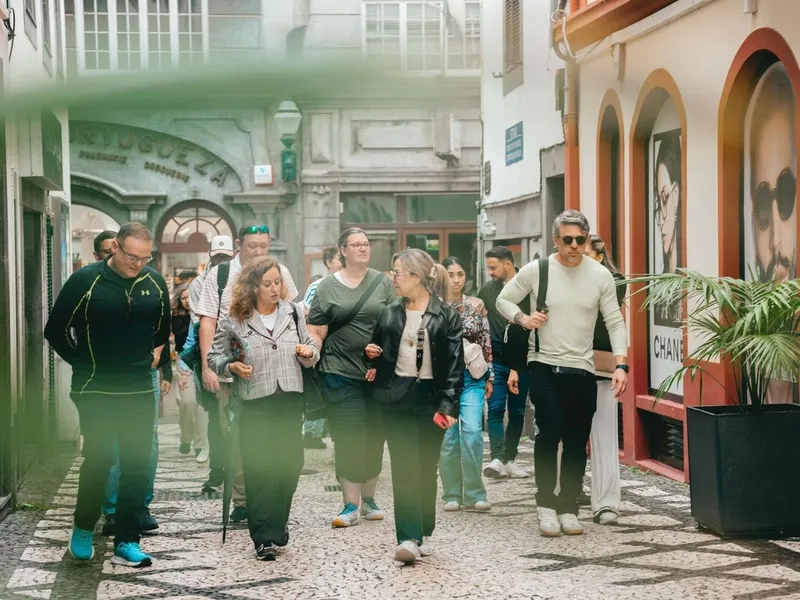 from $107.00
Taste Funchal: Food, Wine and Cultural Tour
A 4 hour Funchal food, wine and culture walk from Rua do Sabão, with vegetarian and gluten-free tasting options.
Check Availability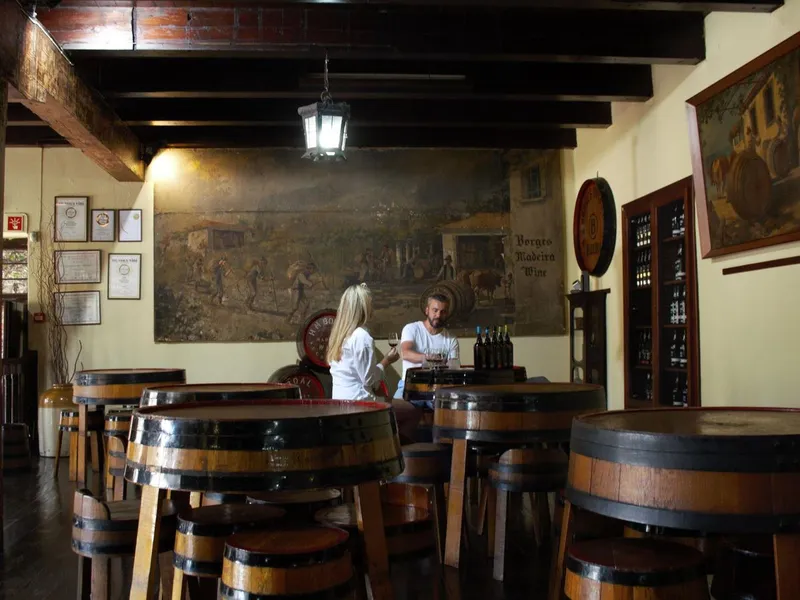 from $23.00
H.M. Borges Winery Guided Tour with Wine Tasting
A short guided tour of the H.M. Borges winery in central Funchal with a wine tasting of 2 to 6 pours, paired with local sweets.
Check Availability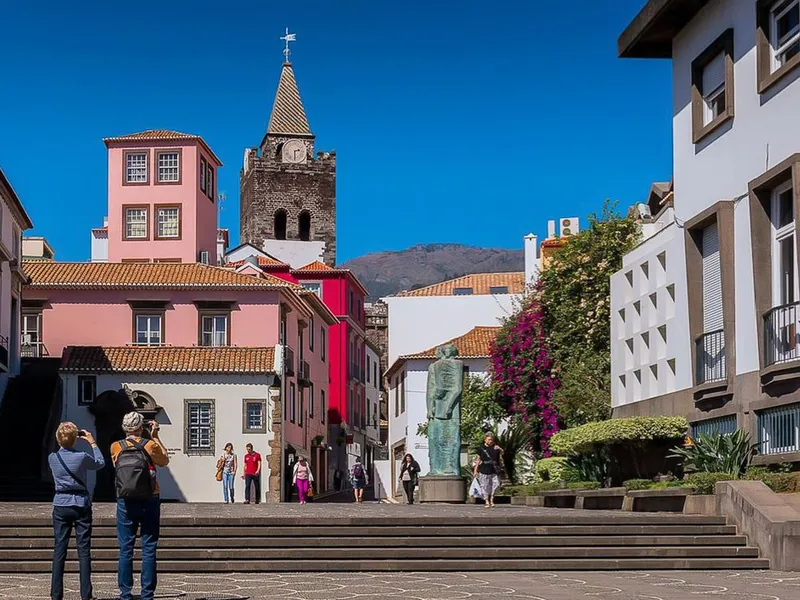 from $19.00
Funchal Old Town Walking Tour
A 2 hour small-group walk through Funchal's Old Town, the Jesuits' College, the Farmers' Market, a wine lodge and a historic sweet factory.
Check Availability from $40.00
Eastern Madeira Full-Day Tour with Rum Tasting
An 8 hour eastern Madeira circuit with the Balcões walk, Santana's thatched houses, a rum tasting at Porto Cruz and free entry to the Guindaste skywalk.
Check AvailabilityPrices, ratings and details are the platform's own. dollar figures are the listed prices — the platform bills in your account's currency.
Fruit and Regional Products Worth Knowing
Half of what makes the cooking here taste different is the raw material: fruit grown on the island, cornmeal, chestnuts from the mountains and sugarcane. Two of these products carry protected names.
Banana, Anona and Passion Fruit
Banana from Madeira arrived with Portuguese navigators in the 16th century and is grown mainly on the south coast. It is small, sweet and creamy, and it carries a Protected Geographical Indication. It is also the fruit that lands next to your fried espada.
Anona, the cherimoya, came to the island in the 17th century and holds a Protected Designation of Origin. Eat it fresh or as a mousse. Passion fruit is everywhere, in poncha, in desserts and in sauces for fish, and the island grows purple, Brazilian yellow and an F1 hybrid, each with its own aroma.
- Banana from Madeira: PGI, mainly the south coast, on the plate with espada
- Anona (cherimoya): PDO, introduced in the 17th century, eaten fresh or as mousse
- Passion fruit: purple, Brazilian yellow and an F1 hybrid, used in poncha and desserts
- Fruto delicioso: the fruit of Monstera deliciosa, rich in potassium and vitamin C
The One Fruit to Treat With Care
Fruto delicioso, the fruit of the Monstera deliciosa, tastes of banana, pineapple and cherimoya at once and grows in the warmer parts of the south. Visit Madeira is explicit that it should only be eaten when ripe, because in its unripe state it is toxic. If you buy one at Mercado dos Lavradores, ask the stall when it will be ready.
Chestnuts and Sugarcane
Chestnuts belong to Curral das Freiras, the valley parish where they are celebrated at a Chestnut Festival that has been running for over three decades, usually between October and November. They appear roasted in the street and in both sweet and savoury cooking.
Sugarcane is the island's oldest industry: it drove the economy in the 15th and 16th centuries, when sugar was called white gold, and it still gives two things you will meet daily, sugarcane honey in the cakes and agricultural rum in the poncha.
Sources: Visit Madeira, regional products and banana from Madeira.
What to Drink With Madeira Food
The drinks list here is short, local and specific, and three of the entries exist nowhere else. None of the official pages prints a price, so none appears below.
Poncha and Nikita
Poncha is the island drink: sugar cane spirit, honey and lemon, stirred hard with a wooden mexelhote, with passion fruit, tangerine, English tomato and mint as the common variations. It comes with a dentinho, a free snack of peanuts or lupin beans. The whole story, including what nobody publishes about its strength, is on our poncha guide.
Nikita is the other Câmara de Lobos invention: ice cream, pineapple, pineapple juice and pale beer blended together, with versions that swap the beer for a soft drink. It is a hot-afternoon drink rather than a dinner one.
Laranjada, Brisa and Coral
Laranjada was created in Madeira in 1872, which makes it one of the oldest soft drinks in the world. It has a distinct orange peel flavour, and at festivities it is mixed with wine or with Coral beer. Brisa Maracujá, created in 1970, was the world's first soft drink made with pure passion fruit juice.
Coral is the local lager, brewed with Czech malts and hops and matured at low temperatures. Between them these three cover almost every soft-drink or beer order you will make on the island.
Madeira Wine and Ginja
Madeira wine is the island's fortified wine, and the official pairing advice is simple: dry styles as an aperitif, medium dry with soups, medium sweet with cheese, sweet with dessert, chocolate or coffee. Which grape and which age label to ask for is set out on our Madeira wine page, and you can taste through several styles on the H.M. Borges winery tour.
Licor de ginja is the mountain alternative, made in Curral das Freiras by infusing ginjas, a fruit close to a cherry, in brandy and sugar for three months.
Sources: Visit Madeira, typical and traditional drinks and the IVBAM Madeira wine portal.
The Food Calendar: When Dishes Taste Best
Some of the best eating on the island is tied to a date rather than a restaurant. The table gathers the food traditions Visit Madeira documents, with what is served at each and where it happens, so you can see if your trip lands on one.
If you are choosing dates and food matters to you, the two strongest nights are Noite do Mercado on 23 December and any summer arraial. Both are street eating rather than restaurant eating, and both put espetada, bolo do caco and poncha in your hands within a few minutes of arriving.
| When | Tradition | What you eat | Where |
|---|---|---|---|
| 23 December | Noite do Mercado | Carne de vinha d'alhos sandwiches, homemade liqueurs, seasonal delicacies | Mercado dos Lavradores and the streets around it, Funchal |
| Penultimate weekend of January | Panelo festival | Panelo, vegetables and sausages | Chão da Ribeira, Seixal |
| Carnival | Malassadas | Fried dough with sugarcane honey | Island-wide |
| Usually June to August | Arraiais, the parish festivals | Espetada, bolo do caco, poncha, candy necklaces | Parishes across the island |
| Usually October to November | Chestnut Festival, over three decades old | Roasted chestnuts, chestnut dishes, ginja | Curral das Freiras |
| 1 November | Magusto, tied to Pão-por-Deus | Chestnuts roasted on a bonfire | Island-wide, family gatherings |
| Christmas | The Christmas table | Carne de vinha d'alhos, bolo de mel, palitos de cerveja | Island-wide |
Going to the Market
Mercado dos Lavradores opened in 1940 and Visit Madeira says it is at its liveliest in the early morning, when the island's fresh produce is being sold and the fish market is working. That is the cheapest hour of the day to taste your way through tropical fruit, and the detail sits on our market page.
Where Madeira Food Traditions Live
Four places on the island where a dish or a drink actually comes from, rather than where it is served. Teal is the market and city, rust is a village tied to one food tradition.
Coordinates from Wikidata and OpenStreetMap.
Where the Food Theme Goes Next
Three pages that turn this dish list into an actual meal, a drink and a bottle.
Where to eat in Madeira
The tables this guide will name, which is the 12-entry MICHELIN Guide 2026 selection for the island, with addresses, cuisines and price bands. Use it once you know what you want to order.
Poncha
The sugar cane drink that comes with almost every plate here, its Câmara de Lobos origins and what no official source publishes about its strength.
Madeira wine
The four noble grapes, the sweetness words and the age labels, plus the two wine lodges Funchal council lists and the H.M. Borges tasting.
Traditional Madeira Food: Questions
What is the traditional food in Madeira?
Espetada, beef on a bay laurel stick with fried cornmeal, bolo do caco sweet potato bread, filete de espada, grilled limpets, carne de vinha d'alhos and picado regional, with bolo de mel for dessert. All of them are documented by Visit Madeira and compared in the dish table.
What dessert is Madeira known for?
Bolo de mel, the dark sugarcane honey cake that dates to the 15th century sugarcane era. It is made with sugarcane honey, butter, lard, walnuts, spices, Madeira wine and candied peel, and it keeps for months, which is why it is the sweet people carry home. The rest of the list is in our sweets section.
What do Madeirans eat for breakfast?
Visit Madeira publishes no breakfast page, so this guide prints no traditional breakfast. What the official pages do document as all-day food is bolo do caco with garlic butter, the prego no bolo do caco as a light meal and queijada da Madeira with coffee. Those three will cover a morning anywhere on the island.
What is espetada?
Chunks of beef seasoned with garlic and bay leaf and roasted over charcoal on a stick cut from bay laurel, though metal skewers are common today. It is served with fried cornmeal, and at festivals it is eaten with wine mixed with laranjada. Try it on the Funchal food and wine walk if you would rather taste before committing to a whole plate.
What is bolo do caco made of?
Bread dough made with sweet potato, cooked on a hot basalt stone called the caco rather than in an oven. It is usually served warm with garlic and parsley butter, and it is also the base of the prego steak sandwich. Read the detail in the bread section.
Is filete de espada really served with banana?
Yes. Visit Madeira names banana or passion fruit as the pairing for the breaded black scabbardfish fillet, and both fruits are grown on the island, the banana with a PGI. It is the most Madeiran plate on any menu, and worth ordering once even if the idea sounds strange.
Which dishes are tied to a particular date?
Malassadas at Carnival, palitos de cerveja at Christmas, panelo at the Seixal festival on the penultimate weekend of January, carne de vinha d'alhos sandwiches at Noite do Mercado on 23 December, and chestnuts around the Curral das Freiras festival. The full list is in the food calendar and the dates sit on our events page.
Traditional Madeira Food on Film
Three films that show the dishes on this page being cooked and eaten, useful before you read a menu in Funchal.
24 Hours of Portuguese Food in Madeira: Espetada, Bolo Do Caco and More
A day of eating through the island's core dishes, the same list this page sets out.
Video: Luke MartinEspetada Madeirense: Traditional Food in Madeira Island
The bay laurel skewer cooked the traditional way, so you know what arrives at the table.
Video: Cozinha com Dino DuarteBolo do Caco: A Portuguese Madeira Island Flat Bread Recipe
How the sweet potato bread is made on the hot stone, the dish behind half the meals here.
Video: NelMar KitchenVideos load from YouTube only when you press play. Restaurants shown in the films are the creators' choices, not this guide's.
Prices, hours and terms are set by the venue or operator and confirmed at checkout.
We may earn a commission if you book through one of our links, at no extra cost to you. Full affiliate disclosure